
Door Sweep & Weatherstripping – Where Needed, Installation Tips
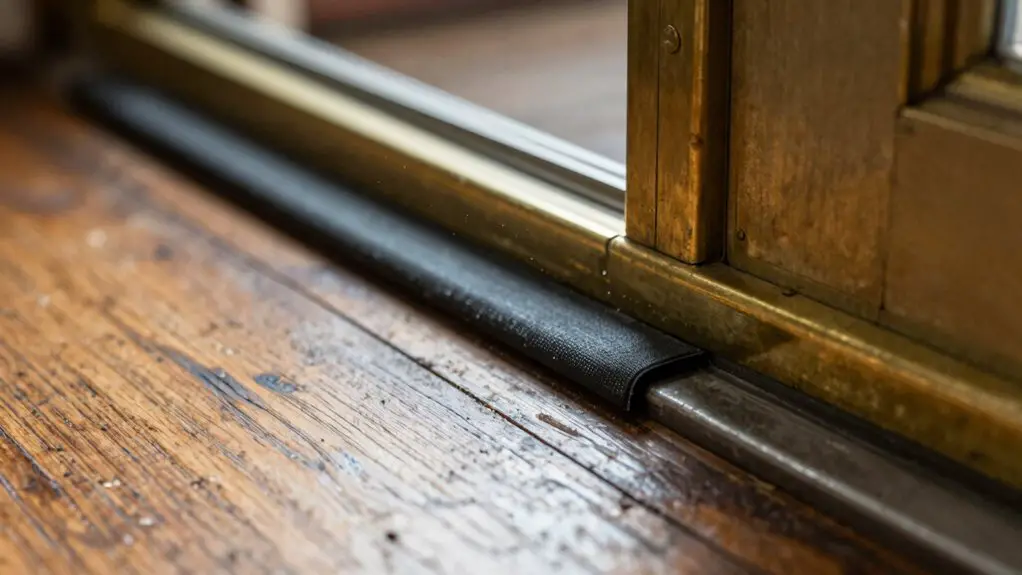
If you’ve noticed a chilly draft creeping under your doors or watched your energy bills climb without explanation, you’re likely dealing with worn or missing door seals. Door sweeps and weatherstripping offer a straightforward fix, but choosing the wrong materials or installing them incorrectly can leave you right back where you started. The difference between a successful seal and a wasted weekend often comes down to details most homeowners overlook.
Signs Your Doors Need Weatherstripping and Door Sweeps
Drafts creeping under your door, visible light gaps around the frame, and rising energy bills often signal that your weatherstripping and door sweeps need attention.
You’ll notice these issues intensify during temperature extremes when conditioned air escapes most rapidly.
Conduct a simple diagnostic: on a sunny day, check for daylight penetrating around closed doors. At night, have someone shine a flashlight around the perimeter while you observe from the opposite side.
Test your door seals with the flashlight trick—if light passes through, so does your energy bill.
Any visible light indicates compromised seals.
Physical indicators include worn, cracked, or compressed weatherstripping that no longer springs back.
Test door sweeps by sliding paper underneath—if it passes through easily, replacement is overdue.
You may also detect moisture infiltration, dust accumulation near door edges, or increased exterior noise transmission, all confirming seal degradation requiring immediate correction.
Types of Door Sweeps and How to Choose the Right One
Selecting the right door sweep depends on your specific door type, gap size, and flooring material. You’ll encounter several primary options: brush sweeps work best over uneven surfaces and high-pile carpets, while vinyl or rubber sweeps create tighter seals on smooth floors.
Automatic door bottoms retract when you open the door, preventing drag damage on carpeting.
Measure your door’s width and the gap between the bottom edge and threshold before purchasing. For gaps exceeding half an inch, choose adjustable or dual-fin sweeps that accommodate larger openings.
Consider your climate—if you’re battling extreme temperatures, opt for sweeps with thermal breaks or multi-layer sealing fins. Match the sweep’s finish to your door hardware for a cohesive appearance.
 GroTheory 2 Pack Door Draft Stopper, Under Door Sweep for Exterior & Interior Doors, Weather Stripping Door Seal, Garage Window Blocker Noise Cold Air...Amazon.com
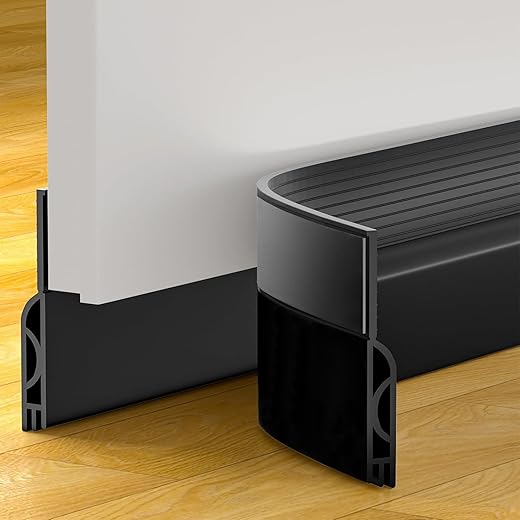 Door Draft Stopper, Door Sweep for Bottom of Door, Weather Stripping Door Seal Gap Filler Bottom Blocker Soundproofing Cold Air Insulation Save Energy...Amazon.com
Understanding Weatherstripping Materials and Their Best Uses
Weatherstripping materials vary widely in durability, cost, and effectiveness, so you’ll want to match your choice to each application’s demands.
Foam tape offers budget-friendly installation for low-traffic areas but compresses permanently over time. V-strip (tension seal) excels in door jambs and window channels, maintaining its spring-back properties for years.
For high-performance sealing, consider EPDM rubber or silicone. Both withstand temperature extremes and resist UV degradation, making them ideal for exterior applications.
Felt remains useful for interior doors where minimal compression occurs, though it absorbs moisture and deteriorates quickly in damp environments.
Metal weatherstripping—typically bronze or aluminum—provides exceptional longevity and suits historic restorations where period-appropriate materials matter.
Tubular gaskets work well along door stops, creating reliable compression seals that accommodate slight frame irregularities.
Tools and Supplies You’ll Need for Installation
Before you begin your weatherstripping project, gather these essential tools: a tape measure, utility knife, scissors, screwdriver, hammer, and hacksaw for cutting metal strips to length.
You’ll also need a pry bar for removing old materials and a caulking gun if you’re sealing gaps before installation.
Stock up on supplies specific to your chosen weatherstripping type. For adhesive-backed foam or felt, grab rubbing alcohol to clean surfaces before application.
Metal weatherstripping requires finishing nails or screws. Door sweeps typically need the screws included in their packaging, though you may want extras on hand.
Keep a pencil ready for marking cut lines and drill points. A level guarantees your door sweep installs straight.
Finally, wear safety glasses when cutting metal strips to protect your eyes from debris.
How to Measure Your Doors for a Perfect Fit
Accurate measurements make the difference between weatherstripping that seals tight and strips that leave gaps or bind against your door.
You’ll need a steel tape measure for precision—cloth tapes stretch and compromise accuracy.
Start by measuring the door’s width at the top, middle, and bottom. Doors aren’t always perfectly square, so record all three measurements and use the largest for your weatherstripping length.
For the jamb sides, measure from the threshold to the head jamb.
Next, assess your gap sizes. Close the door and use a feeler gauge or folded paper to determine the space between the door edge and frame. This measurement determines which weatherstripping thickness you’ll need.
Record gaps at multiple points since they often vary.
Step-by-Step Door Sweep Installation Guide
Installing a door sweep takes about fifteen minutes and requires only basic tools you likely already own. Gather your measuring tape, hacksaw, drill, and screwdriver before starting.
First, close the door and mark where the sweep should contact the threshold—you’ll want consistent contact without excessive drag.
Remove the door sweep from its packaging and hold it against your marks to verify alignment.
Cut the sweep to your previously measured length using the hacksaw, filing any rough edges.
Position the sweep against the door’s interior face, ensuring it sits flush against the threshold. Pre-drill pilot holes through the mounting slots to prevent wood splitting.
Drive screws through each slot, leaving them slightly loose until you’ve tested the door’s operation, then tighten fully.
Installing Weatherstripping Around Door Frames
Most door frames have three surfaces that need weatherstripping: the two side jambs and the head jamb across the top. You’ll achieve the best sealing by installing V-strip, foam tape, or adhesive-backed rubber along these surfaces.
Start by cleaning the jambs thoroughly with denatured alcohol to guarantee proper adhesion. Measure each jamb’s full length, then cut your weatherstripping material accordingly.
For V-strip installation, position the open end facing outward toward the door stop, creating compression when the door closes. Apply the weatherstripping in continuous runs, pressing firmly along the entire length. Avoid stretching adhesive-backed materials during installation, as this compromises their seal over time.
Test your work by closing the door and checking for visible gaps or light penetration. Adjust positioning if the door binds or fails to latch properly.
Special Considerations for Exterior Vs Interior Doors
While both exterior and interior doors benefit from weatherstripping, exterior doors demand more robust materials and thorough installation due to their direct exposure to weather elements.
You’ll need to select weatherstripping rated for temperature extremes, UV resistance, and moisture exposure. Consider reinforced vinyl, silicone, or metal options that won’t degrade under harsh conditions.
For interior doors, your primary concerns shift to sound dampening and maintaining climate zones between rooms.
Lighter-duty foam or felt weatherstripping typically suffices here, as these doors face minimal environmental stress.
When addressing exterior thresholds, you must account for water drainage and potential ice accumulation.
Install adjustable door sweeps that create tight seals without impeding operation.
For interior applications, focus on reducing air transfer between heated and cooled spaces to maximize your HVAC efficiency.
Common Installation Mistakes and How to Avoid Them
Even the best weatherstripping materials won’t perform properly if you’ve made errors during installation.
The most frequent mistake is failing to clean surfaces thoroughly before application—adhesive-backed strips won’t bond to dusty or oily door frames. You’ll also compromise performance by cutting materials too short, leaving gaps at corners where air infiltrates freely.
Another critical error involves over-compressing foam weatherstripping during installation. When you squeeze it too tightly, you reduce its sealing capacity and accelerate material fatigue.
Conversely, leaving excessive gaps defeats the purpose entirely.
Don’t install weatherstripping in extreme temperatures; adhesives fail below 50°F and above 100°F.
Finally, avoid the temptation to stretch vinyl or rubber strips during application—they’ll contract over time, creating gaps you’ve worked to eliminate.
Maintaining Your Door Seals for Long-Term Performance
Regular maintenance keeps your door seals working effectively for years, but you’ll need to check on them seasonally to catch problems early. Inspect weatherstripping for cracks, compression damage, and gaps where material has pulled away from the frame.
Seasonal inspections catch weatherstripping problems early—look for cracks, compression damage, and gaps before they compromise your door’s seal.
Clean your seals quarterly using mild soap and water to remove dirt buildup that accelerates deterioration. For vinyl and rubber components, apply silicone-based lubricant annually to maintain flexibility and prevent brittleness.
Test seal integrity by sliding paper between the door and weatherstripping—if it passes through easily, you’ve lost compression. Replace sections showing wear before complete failure occurs.
Door sweeps require particular attention. Check mounting screws for looseness and verify the sweep contacts the threshold evenly across its length.
Adjust or replace components immediately when you detect drafts or visible light penetration.