
How to Build a Raised Garden Bed – Lumber, Layout, and Soil Tips
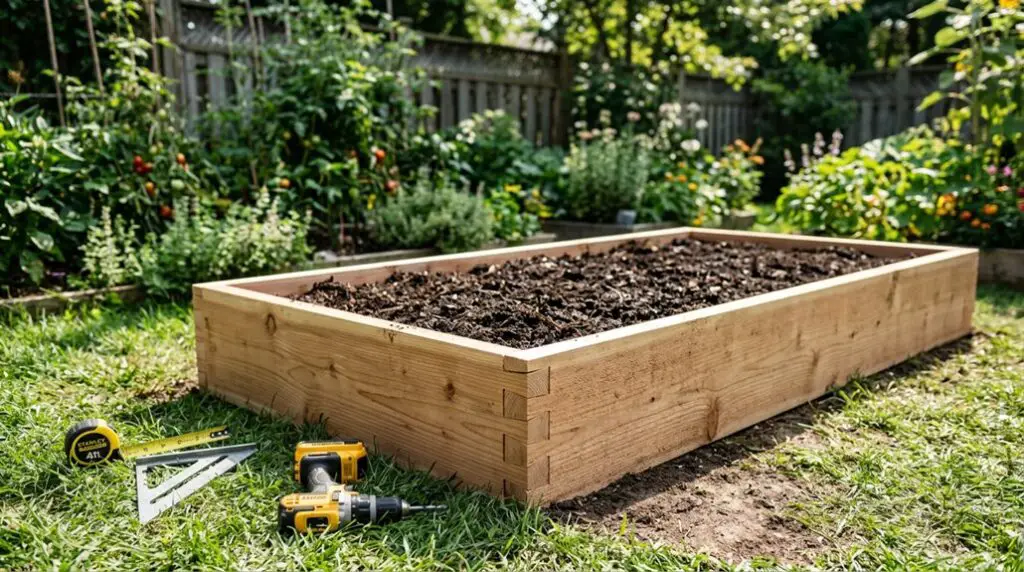
Nearly 35% of American households now grow food at home, and raised garden beds are one of the fastest ways to get started. You’ll need the right lumber, a smart layout, and a soil mix that actually feeds your plants—but getting any of these wrong can cost you a full season’s harvest. The good news is that a few simple choices upfront make all the difference between a thriving bed and a frustrating one.
Pick the Right Spot for Your Raised Garden Bed
Finding the right spot for your raised garden bed comes down to one critical factor: sunlight. You’ll want a level area that gets 6 to 8 hours of direct sunlight daily. Your chosen spot should be free from large trees or structures that cast shade, which directly limits plant growth.
Aim for a south-facing location if you’re in the northern hemisphere to maximize light exposure. Keep raised garden beds 28 to 48 inches apart for easy access and efficient light distribution.
Don’t overlook drainage. Avoid flood-prone zones and prioritize free-draining ground to maintain healthy soil conditions. When you command every variable—sunlight, spacing, and moisture control—you’re building the foundation for dominant results.
Choose the Best Lumber for a Raised Bed That Lasts
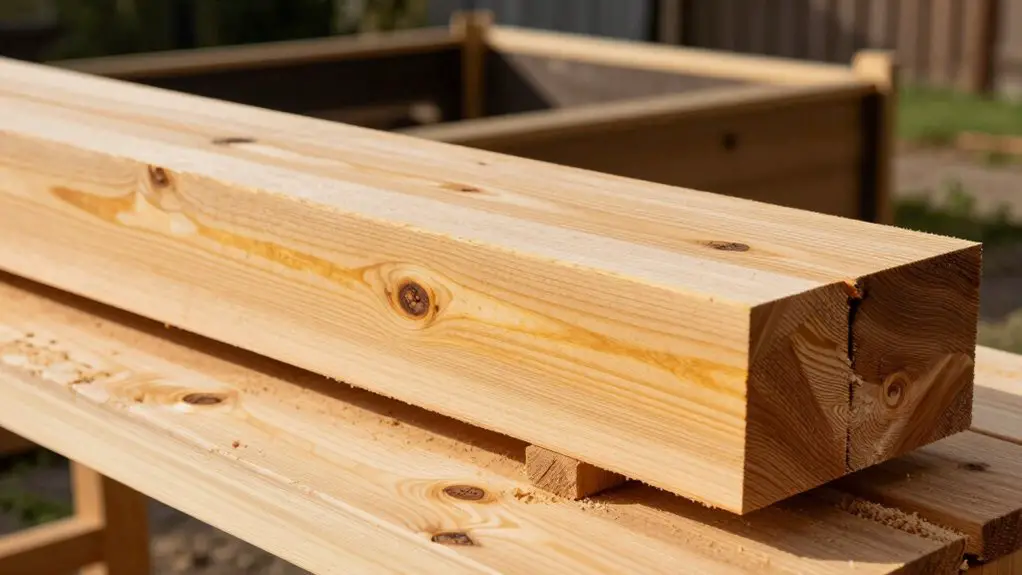
Once you’ve locked down the right location, your next decision—lumber selection—determines how long your raised bed holds up. The best wood for raised beds is 2×6″ redwood or cedar boards, which deliver superior durability and natural decay resistance without chemical treatments. Use 4×4″ redwood posts at corners for strong support and structural stability.
Avoid treated wood containing arsenic, as chemical leaching can contaminate your soil and compromise your harvest. If budget matters, pressure-treated softwood is a cost-effective option, but line the interior with a plastic barrier to block direct soil contact. For beds taller than 20cm, consider masonry materials like brick or stone—they’ll outperform wood in wall strength. Choose your lumber wisely, and your raised bed commands the garden for years.
Size Your Raised Garden Bed: Width, Length, and Depth
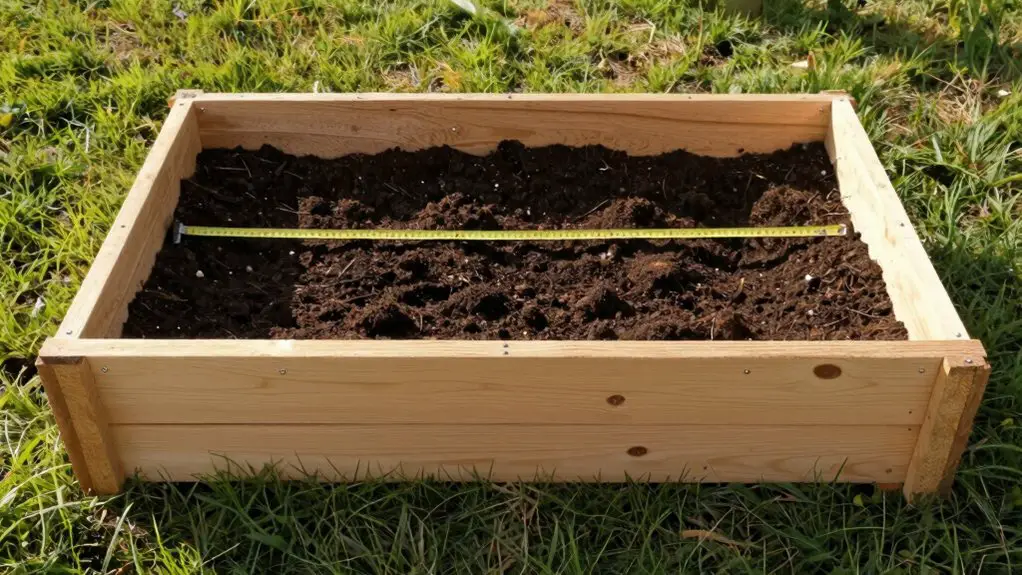
Three dimensions—width, length, and depth—define how productive and manageable your raised bed will be. Keep your width between 3 and 4 feet so you can reach the center from either side without stepping on the soil. For length, 8-foot sections are best for accessibility and crop rotation, though you can extend up to 24 feet if needed.
Depth demands the most strategic thinking. Shallow-root crops need a minimum of 6 inches, but you’ll get the best results when you fill your bed to 12–18 inches deep—enough for most vegetables. Deep-root crops require up to 36 inches. Choose your dimensions based on what you’re growing. With these raised beds dialed in, you can plant 2 to 5 times tighter than conventional spacing, maximizing every square foot of productivity.
Plan Your Raised Bed Layout and Spacing
Now that you’ve locked in the right dimensions for each bed, it’s time to think about how those beds sit in relation to one another. When you build a raised bed, spacing between units matters as much as the size of each one. Leave 6 inches to 1 foot between raised beds to maximize your growing area while maintaining access from all sides. This spacing lets you walk comfortably, haul soil, and fill the bed without obstacles. It’s best to build beds no longer than 8 feet in length, with a width of 3 to 4 feet, so you command every square inch. Proper soil depth and tight plant spacing within each bed drive higher yields, giving you dominant control over your harvest.
Build Your Raised Garden Bed Frame Step by Step
The frame is the backbone of your raised garden bed, and building one requires just a few materials and basic tools. Choose rot-resistant wood like pressure-treated lumber or cedar, and cut boards to your desired dimensions.
A simple frame of rot-resistant wood is all it takes to start building your perfect raised garden bed.
- Cut boards to build a frame typically 4 feet wide and 6-8 feet long for ideal reach and sunlight exposure.
- Assemble the rectangle by positioning shorter boards inside longer ones, then drill pilot holes and drive 3-inch exterior screws.
- Reinforce any raised bed longer than 6 feet with galvanized steel mending braces at each corner.
- Level the frame in a location that receives 6-8 hours of direct sunlight daily.
- Fill the finished bed with a soil blend of native earth and compost for powerful growing conditions.
Fill Your Raised Bed With the Right Soil Mix
Getting the soil right is just as important as building the frame itself. For a standard raised bed, you’ll need a balanced soil mixture of 50% native soil and 50% compost. This combination improves drainage holes’ effectiveness and promotes healthy plant growth. Run a soil test before planting to identify nutrient gaps.
Deep beds of 12 to 18 inches support most vegetables, especially those in full sun. Larger plants may need up to 36 inches. Prioritize organic matter to enrich your mix and boost plant health. You should refresh your soil each season by adding compost, maintaining structure and fertility in raised beds. A well-balanced mix gives you command over aeration, drainage, and root development.
Pick the Best Plants for a New Raised Garden Bed
Choosing the right plants for your raised garden bed sets the stage for a productive growing season. Your well-draining soil and nutrient-rich environment give you the power to grow almost anything, so be strategic with your garden design.
- Grow a mix of vegetables, herbs, and flowers like sunflowers and bee balm to attract pollinators and beneficial insects.
- Honor spacing requirements by placing larger varieties like tomatoes and peppers 18 to 24 inches apart.
- Maximize the top 12 to 18 inches of soil by growing leafy greens and root vegetables that thrive in raised beds.
- Use companion planting strategies, pairing basil with tomatoes to deter pests naturally.
- Select plants suited to your climate using tools like the BeeSmart Pollinator Gardener app for region-specific growing recommendations.
Keep Your Raised Bed Thriving All Season
Once your raised garden bed is planted, a few consistent habits will keep it productive from spring through fall. Check soil moisture regularly by pressing a finger into the top inch. Raised beds offer good drainage, but they dry out faster than native soil, especially during warm stretches. Apply a layer of mulch on top for moisture conservation and weed suppression.
Spread heavy compost each growing season to maintain ideal soil fertility. Perform soil tests every two to three years so you can amend precisely. Implement crop rotation by switching plant families each season—this prevents disease buildup and nutrient depletion. These straightforward practices give you command over your raised beds, ensuring strong, consistent harvests all season long.