
Siding Repair and Replacement – Vinyl Vs Fiber Cement Compared
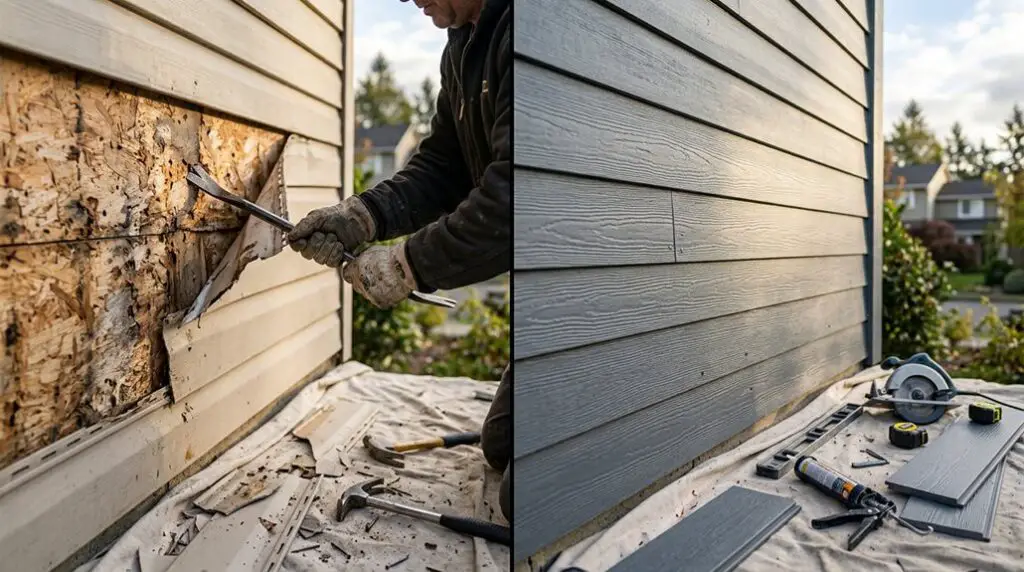
When it’s time to repair or replace your siding, the choice often comes down to two popular options: vinyl and fiber cement. Both materials protect your home, but they differ markedly in durability, cost, maintenance, and long-term value. You’ll want to understand exactly where each one excels—and where it falls short—before committing to a decision that’ll shape your home’s appearance and performance for decades.
Fiber Cement vs. Vinyl Siding at a Glance
Two of the most popular siding materials on the market today are fiber cement and vinyl, and each brings distinct advantages depending on your priorities. When you weigh the pros and cons, fiber cement delivers superior durability and moisture resistance, lasting over 50 years with minimal maintenance requirements. Vinyl siding costs less upfront but may need replacement sooner due to cracking or warping in harsh climates.
Both options enhance curb appeal and energy efficiency, though fiber cement stands out for its resilience against extreme weather. Vinyl’s maintenance requirements are low, but damage can shorten its lifespan to 20–40 years. Your decision ultimately depends on whether you prioritize immediate savings or long-term performance that commands lasting value for your property.
Durability and Lifespan: Fiber Cement vs. Vinyl
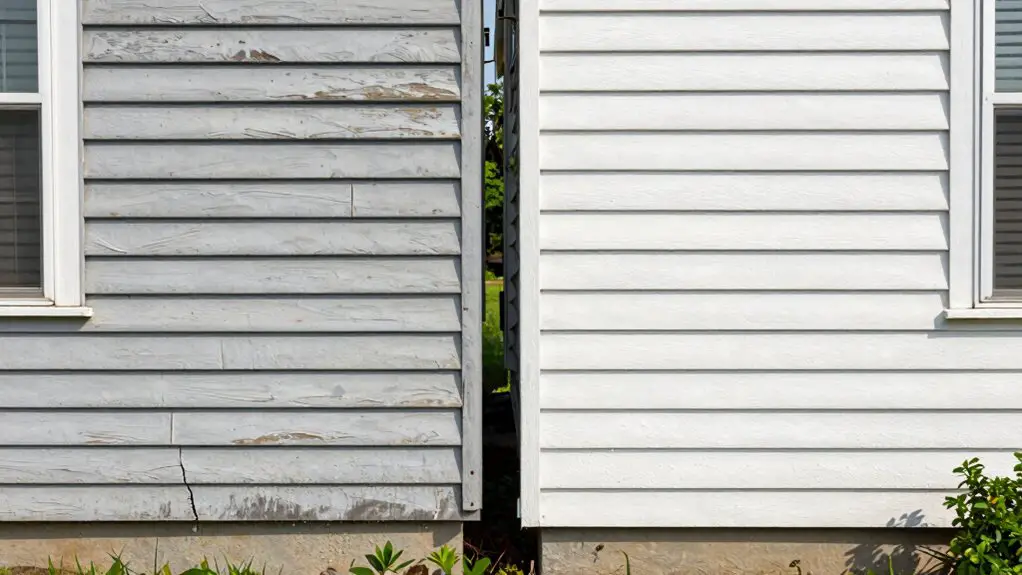
When you’re choosing between fiber cement and vinyl siding, durability often becomes the deciding factor. Fiber cement delivers a lifespan of 50 years or more, while vinyl siding typically lasts 20 to 40 years. For homeowners who demand long-term performance, fiber cement gives you the edge.
Here’s what sets fiber cement apart:
- Fire resistance – Fiber cement holds a Class 1(A) fire rating, far surpassing vinyl’s plastic-based composition that ignites quickly.
- Impact damage protection – Vinyl can crack in cold temperatures and warp in heat, while fiber cement withstands hail and high winds.
- Moisture resistance and minimal upkeep – Fiber cement resists pests and moisture, requiring only repainting every 15-20 years, keeping maintenance costs low.
How Does Each Siding Handle Extreme Weather?
Extreme weather puts your siding to the test, and the material you choose determines how well your home holds up season after season. Vinyl becomes brittle in sub-zero temperatures, cracking during freeze-thaw cycles and demanding costly repair. Hail can dent or shatter it on impact, while high winds rattle panels loose. Moisture trapped behind vinyl promotes mold growth, undermining your home’s insulation and energy efficiency.
Fiber cement delivers superior durability under extreme weather conditions. It resists hail damage, stays secure in violent winds, and won’t harbor mold or decay in humid climates. Its thermal expansion properties maintain structural integrity through dramatic temperature swings. You gain lasting protection without the frequent maintenance vinyl demands, keeping you in command of your home’s defense.
Fiber Cement and Vinyl Siding Costs Compared
Beyond weather performance, the price tag on your siding project plays a major role in your decision. Vinyl vs fiber cement siding installation costs differ markedly. Vinyl’s lower initial cost of $5–$8 per square foot gives you immediate savings, while cement runs $10–$15 per square foot installed.
Here’s what you need to command this decision:
- Siding durability: Fiber cement offers 50+ years of lifespan compared to vinyl’s 20–40 years, giving you lasting dominance over deterioration.
- Maintenance costs: Vinyl requires no repainting, but fiber cement needs repainting every 15–20 years, adding to long-term expenses.
- Return on investment: Fiber cement’s aesthetic appeal drives stronger buyer preference, making your siding materials a powerful equity builder despite higher upfront costs.
Maintenance, Appearance, and Long-Term Value
Although both siding options protect your home’s exterior, their maintenance demands and aesthetic impact differ markedly over time. Vinyl siding is low maintenance, requiring only soap and water cleaning. Fiber cement siding needs repainting every 15-20 years but resists mold and mildew far better than vinyl, which traps moisture and develops unsightly stains.
In appearance, fiber cement delivers superior durability and aesthetic appeal by mimicking natural wood, boosting your home’s curb appeal. Vinyl often looks synthetic by comparison. For long-term value, fiber cement lasts 50+ years versus vinyl’s 20-40 years, reducing replacement costs. At resale value, fiber cement returns 75-88%, making it a powerful investment. You’ll also benefit from energy savings, as fiber cement’s density provides better insulation performance for your home.
How to Choose the Right Siding for Your Home
Now that you understand how maintenance, appearance, and long-term value compare between these two materials, you can start narrowing down which siding fits your specific situation. In the Cement Siding vs Vinyl debate, fiber cement siding offers superior durability, while vinyl wins on upfront affordability. To make the best siding decision for your home, evaluate these three factors:
- Budget vs. longevity: Vinyl costs $5-8 per square foot, but fiber cement’s 50+ year lifespan delivers stronger long-term value.
- Climate and energy efficiency: Fiber cement withstands extreme weather, while vinyl can crack in freezing temperatures.
- Maintenance preferences and resale value: Vinyl requires less upkeep, but fiber cement boosts resale value up to 88%.
This home siding comparison and environmental impact analysis will drive a confident decision for your home.