
Attic Insulation Check – R-Value Requirements, Heat Loss Signs
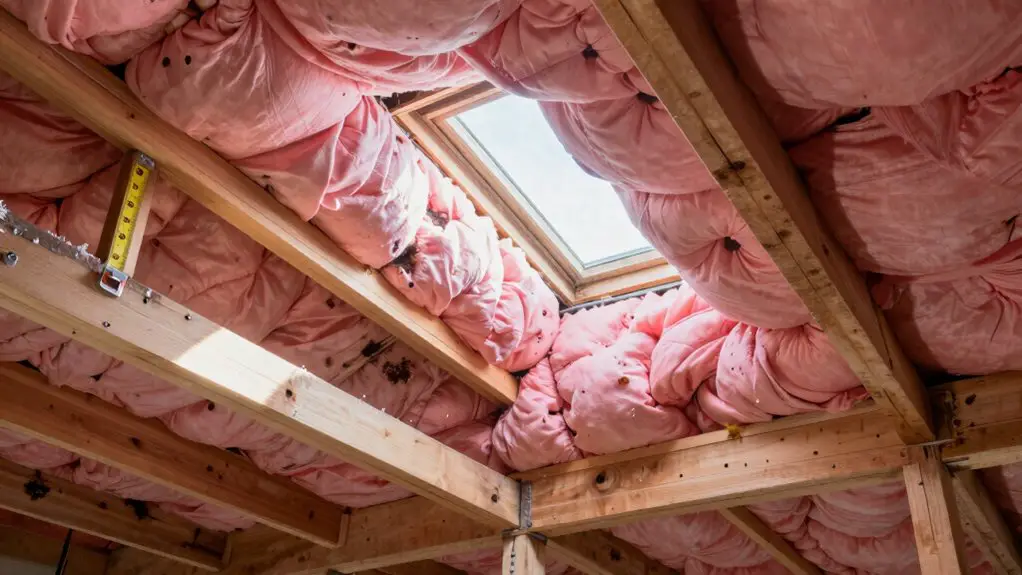
Your attic insulation might be costing you hundreds of dollars each year without you even realizing it. Whether you’re noticing ice dams forming on your roof, dealing with rooms that never seem comfortable, or watching your energy bills climb during extreme weather, the culprit often lies just above your ceiling. Understanding R-value requirements for your climate zone is the first step toward solving these problems—and the numbers might surprise you.
Understanding R-Value and What It Means for Your Home
When you’re evaluating your attic insulation, R-value is the single most important number you need to understand.
This measurement quantifies thermal resistance—the material’s ability to impede heat flow. Higher R-values indicate superior insulating performance.
Your climate zone dictates the minimum R-value your attic requires. The Department of Energy recommends R-38 to R-60 for most U.S. homes, with colder regions demanding values at the higher end.
You’ll find these specifications in Zone maps published by the IRC.
R-value accumulates additively. If you’ve got existing R-19 insulation and add R-30, you’ll achieve R-49 total.
However, compressed insulation loses effectiveness—don’t pack materials tighter thinking you’ll gain performance.
Each insulation type delivers specific R-values per inch, so calculate your current depth against manufacturer specifications to determine your actual protection level.
Regional R-Value Requirements by Climate Zone
Because climate conditions vary dramatically across the United States, the Department of Energy has established eight distinct climate zones—each with specific R-value requirements for attic insulation.
In Zones 1-2 (southern states like Florida and Texas), you’ll need R-30 to R-49.
Zones 3-4 require R-38 to R-60, covering mid-Atlantic and Pacific Northwest regions.
If you’re in Zones 5-8 (northern states through Alaska), you’ll want R-49 to R-60 minimum.
These aren’t arbitrary figures—they’re calculated based on heating degree days, cooling loads, and energy cost optimization.
R-value recommendations are engineered from real climate data—not guesswork—to maximize energy savings in your specific region.
You can identify your zone using the DOE’s climate zone map or your ZIP code on Energy Star’s website.
Don’t assume your current insulation meets code.
Building standards have increased considerably since 2010, and older homes frequently fall short of modern requirements.
Common Signs of Heat Loss Through Your Attic
Even if you haven’t measured your insulation’s R-value, your home often reveals heat loss through unmistakable warning signs. Ice dams forming along your roof’s edge indicate warm air escaping through inadequate attic insulation, melting snow that refreezes at the eaves.
You’ll also notice icicles hanging mainly from specific roof sections where insulation gaps exist.
Inside your home, watch for uneven temperatures between rooms and cold ceilings during winter months. Your HVAC system cycling excessively signals it’s compensating for thermal losses.
Check your energy bills—unexpected spikes during extreme weather confirm your attic’s thermal barrier isn’t performing.
Visually inspect your attic for light penetrating through gaps, moisture accumulation, or frost on roof sheathing. These indicators pinpoint exactly where your insulation fails, guiding targeted remediation efforts.
How to Measure Your Current Attic Insulation Levels
Once you’ve identified potential heat loss areas, you’ll want to measure your attic insulation to determine if it meets recommended levels for your climate zone.
Grab a ruler and flashlight, then carefully walk on ceiling joists—never between them. Insert the ruler straight down through the insulation until it touches the attic floor.
Record measurements at multiple locations, as settling creates uneven depths.
Next, identify your insulation type. Fiberglass batts typically provide R-3.2 per inch, while blown cellulose offers R-3.7 per inch. Multiply your measured depth by the appropriate R-value per inch to calculate your total R-value.
Compare your results against Department of Energy recommendations for your region. Most climates require R-38 to R-60 in attics.
If your calculations fall short, you’ve pinpointed exactly where upgrades will deliver measurable energy savings.
Types of Attic Insulation Materials and Their R-Values
Choosing the right attic insulation material directly impacts your home’s energy efficiency and long-term comfort.
Each material delivers distinct R-values per inch, affecting how much you’ll need to achieve peak thermal resistance.
Fiberglass batts provide R-3.2 to R-3.8 per inch and remain the most affordable option.
Blown-in fiberglass offers R-2.2 to R-2.7 per inch but fills irregular spaces effectively.
Cellulose, made from recycled paper, delivers R-3.2 to R-3.8 per inch and resists air infiltration better than fiberglass.
Spray foam outperforms all options—open-cell yields R-3.5 to R-3.7, while closed-cell achieves R-6.0 to R-7.0 per inch.
Mineral wool provides R-3.0 to R-3.3 per inch with superior fire resistance.
You’ll multiply your chosen material’s R-value per inch by the installed depth to calculate total thermal performance.
When to Upgrade Your Attic Insulation for Maximum Energy Savings
Upgrade immediately if your current insulation measures below R-30 in climate zones 1-3 or below R-49 in zones 4-7. You’re losing significant money monthly.
Prioritize replacement when you observe compressed, water-damaged, or pest-contaminated insulation—these conditions slash thermal performance regardless of original R-value ratings.
Consider upgrading before major HVAC replacements. Proper insulation reduces equipment sizing requirements, cutting both installation and operational costs.
Schedule upgrades during roof repairs or renovations when attic access is already compromised.
Calculate your payback period by comparing upgrade costs against projected energy savings. Most homeowners recoup investments within 3-5 years, with insulation lasting 20+ years afterward—delivering pure savings throughout its remaining lifespan.