You might not realize that not all snow blowers are created equal when it comes to handling tough winter conditions. Some models stand out for their innovative features, like battery power and efficient motors. If you’re looking for performance and comfort this winter, you’ll want to know which machines top the list for reliability. Let’s explore the best options available that can ease your winter frustrations.
EGO Power+ Cordless Snow Blower with Batteries and Charger
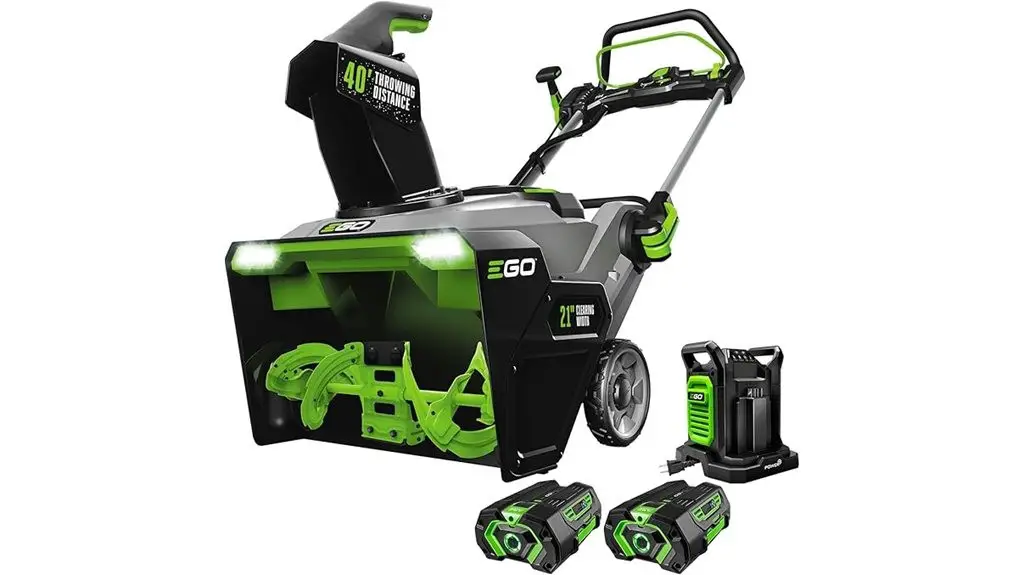
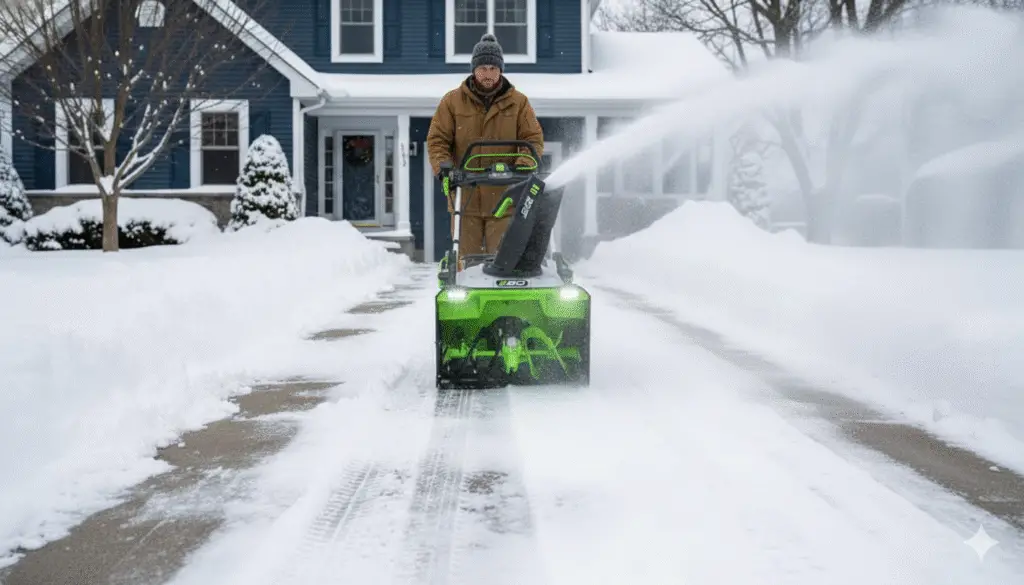
If you’re looking for a reliable snow blower that combines power and portability, the EGO Power+ Cordless Snow Blower is an excellent choice. With its 21-inch clearing width and two 5.0Ah batteries, you’ll tackle snow depths up to 8 inches effortlessly. The steel auger cuts through heavy snow 50% faster than previous models, throwing it up to 40 feet away. Its high-efficiency brushless motor and variable speed auger control guarantee ideal performance. Plus, it’s lightweight and easy to maneuver, making your snow-clearing tasks simple and quick. Just keep in mind the battery life during heavier snowfall for uninterrupted operation.
Best For: Homeowners looking for an efficient and portable solution for clearing moderate snow depths without the noise and hassle of gas-powered models.
Pros:
- Lightweight and easy to maneuver, making snow clearing simple and efficient.
- Quiet operation compared to gas-powered snow blowers, allowing for comfortable use.
- Powerful performance with the capability to throw snow up to 40 feet and handle various snow types.
Cons:
- Limited battery life, especially under heavy snow conditions, which may require breaks for recharging.
- Narrow clearing width may not be ideal for wider driveways or larger areas.
- Potential clogging issues depending on snow consistency might require additional maintenance.


EGO Power+ 21-Inch Cordless Snow Blower with Batteries and Charger
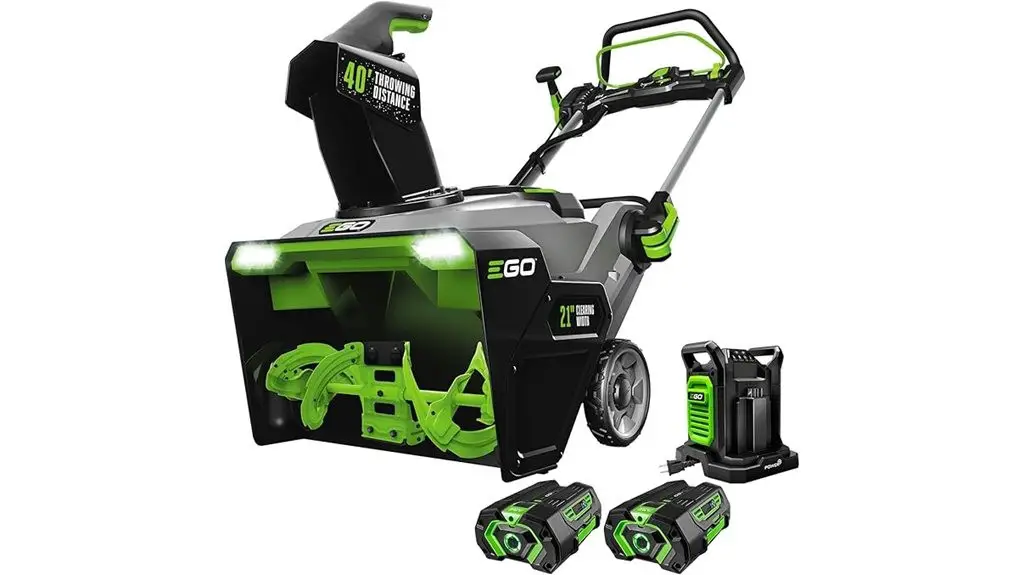
For homeowners dealing with light to moderate snowfall, the EGO Power+ 21-Inch Cordless Snow Blower offers a powerful yet manageable solution. With its peak power technology and steel auger, this snow blower clears through snow and ice efficiently, throwing debris up to 40 feet. Weighing just 50.6 pounds, it’s easy to maneuver. You’ll appreciate the instant start and quiet operation, thanks to its battery power. Expect about 20 minutes on high power, making it ideal for clearing an 8-inch snowfall on a typical driveway. While battery charging takes about 75 minutes, the user-friendly design makes winter maintenance a breeze.
Best For: Homeowners seeking an efficient and lightweight snow removal solution for light to moderate snowfall.
Pros:
- Lightweight design at 50.6 pounds for easy maneuverability.
- Instant start and quiet operation with no gas fumes.
- High-efficiency steel auger clears snow and ice 50% faster.
Cons:
- Battery charge time of approximately 75 minutes may be inconvenient.
- Limited run time of about 20 minutes on high power, not ideal for heavy-duty tasks.
- The 21-inch clearing width may not suffice for larger areas.
Factors to Consider When Choosing Snowblowers
When you’re choosing a snowblower, several factors can impact your decision. Think about the power source options, the clearing width, and how deep the snow typically gets in your area. Also, consider the weight and maneuverability of the machine, along with battery life if you opt for a cordless model.
Power Source Options
Choosing the right power source for your snowblower can make all the difference in how effectively you tackle winter storms. You’ve got several options: gas, electric (corded or cordless), and battery-powered models, each with unique benefits. Gas-powered snowblowers deliver powerful performance for heavy tasks, but they can be noisy and require more upkeep. Electric snowblowers are quieter and emissions-free, yet corded models need a power outlet nearby, while cordless options may have limited runtime depending on the snow conditions. Battery-powered snowblowers, equipped with advanced lithium-ion technology, provide convenience without gas, though charging times can vary. Consider these factors carefully to find the perfect balance for your winter needs.
Clearing Width Consideration
Clearing width plays an essential role in ensuring efficient snow removal. It determines how wide a path your snow blower can clear in one pass. For residential driveways and sidewalks, a 21-inch clearing width is effective, handling up to 8 inches of snow. If you’ve got a larger driveway or need to clear expansive areas, a wider clearing width may save you time, but maneuverability can become an issue in tight spaces. Keep in mind that while wider options expedite snow removal, they might prove challenging on uneven surfaces. Ultimately, your choice should hinge on the size of the area needing clearance and your ability to handle the machine effectively. Choose wisely for excellent performance!
Snow Depth Capability
After considering clearing width, snow depth capability becomes a key factor in selecting the right snow blower for your needs. You’ll want to check the manufacturer’s specified ideal depth, as this indicates how well the machine can handle snow without straining. If you typically experience moderate snowfall, a snow blower rated for up to 8 inches will often suffice. However, remember that deeper snow may require a two-stage model for efficient performance. Single-stage snow blowers are generally aimed at light to moderate conditions and can struggle with heavy accumulations. By understanding your typical snowfall and the snow blower’s capabilities, you can choose a model that’s powerful enough for your specific winter challenges.
Weight and Maneuverability
When tackling snow removal, the weight and maneuverability of a snow blower play essential roles in your overall experience. Lighter models, usually around 50-60 lbs, are easier to handle and transport, especially if you have limited strength. Consider the design; ergonomic handles and strategic wheel placement enhance maneuverability, making it simpler to navigate tight spaces. The snow blower’s width and height matter too, as they dictate whether it can fit through narrow pathways or gates. While heavier models offer more stability in tough conditions, they demand more physical effort to operate. Look for adjustable features like variable speed control and rotating chutes, which let you customize operation for different snow conditions, improving your efficiency.
Battery Life Duration
Choosing the right snow blower involves more than just weight and maneuverability; battery life is an essential factor that can greatly impact your snow removal efforts. Battery life varies depending on conditions; some models last about 20 minutes of high-power use and up to 50 minutes on lower settings. If you’re tackling larger areas, consider a blower that requires two batteries to extend the operating time. Keep in mind that heavy, wet snow can drain your battery faster, cutting down effective usage. Additionally, recharge time can take around 75 minutes, so you’ll need to plan for potential downtime during extensive tasks. Being aware of battery life estimates will help you manage your snow clearing efficiently.
Assembly and Setup Time
Selecting a snow blower that’s easy to assemble can save you valuable time on snowy days. Some models can be ready to go in just 15 minutes, needing little more than handle assembly and chute installation. A snowblower with minimal setup allows you to tackle winter weather efficiently right out of the box. Clear assembly instructions play an essential role, especially if you’re not familiar with power equipment. An easy setup can greatly enhance your satisfaction, enabling immediate operation when heavy snowfall hits. When you prioritize functionality and quick deployment, you’ll appreciate choosing a snowblower designed for straightforward assembly, making those long winter days a bit less intimidating.
Noise Level Comparison
How much noise are you willing to tolerate while clearing snow? If you prefer a quieter experience, electric snowblowers are your best bet. They typically operate at sound levels of around 60-70 decibels, considerably less than gas models, which can reach 90 decibels or more. This means you won’t need hearing protection, and you’ll keep the peace in your neighborhood. Many users enjoy the serene environment electric models provide, making them ideal for residential areas with noise restrictions. Plus, they don’t emit exhaust fumes, enhancing your comfort during long sessions. Some electric snowblowers even incorporate advanced technology to reduce noise further, allowing you to clear snow without disturbing the tranquility around you.
Durability and Construction Quality
When it comes to snowblowers, durability and construction quality are critical factors that can influence your choice markedly. Look for models made from heavy-duty steel or composite materials; these options offer enhanced durability and resistance to wear and tear. Weighing around 50 pounds strikes a balance between sturdiness and maneuverability, making handling easier. Also, make certain the snowblower has weather-resistant construction to withstand moisture and ice during operation. Evaluate assembly requirements too; minimal setup and user-friendly designs often indicate quality. Finally, check the warranty and customer support options—they reflect the manufacturer’s confidence in the product’s durability and reliability. Prioritizing these aspects will help you invest in a snowblower that lasts through harsh winters.