
How to Power Wash Your Patio – Concrete, Pavers, and Wood Cleaning Guide
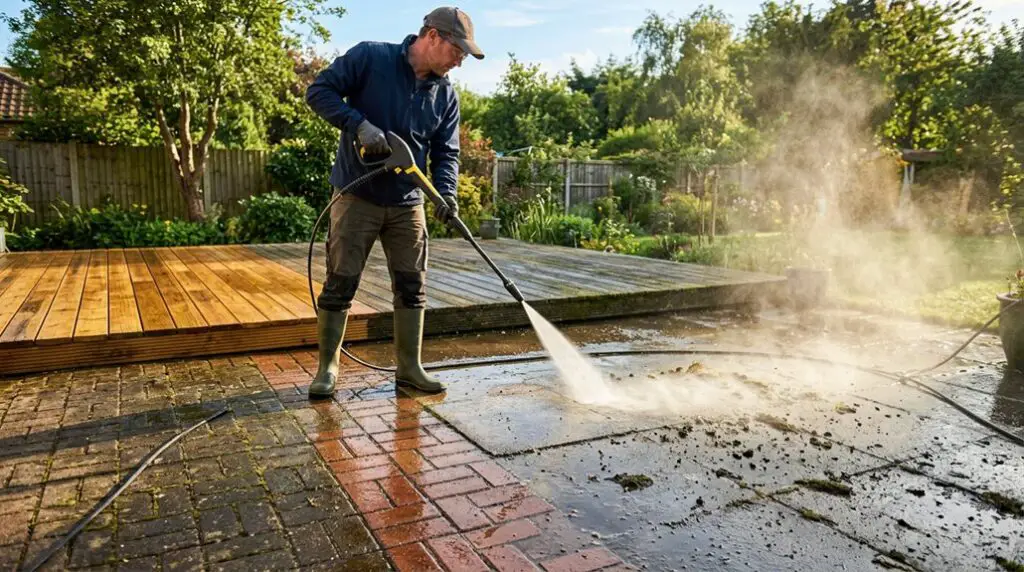
If you’ve ever pointed a pressure washer at your patio and hoped for the best, you’re not alone—but that approach can crack concrete, gouge wood, or blast sand right out of your paver joints. The difference between a clean patio and a damaged one comes down to PSI, nozzle choice, and technique. Get those three things right, and you’ll transform your outdoor space. Get them wrong, and you’ll wish you hadn’t started.
Choose the Right Machine and Nozzle to Power Wash Your Patio
Picking the right pressure washer starts with understanding the surface you’re cleaning. Electric models handle wood effectively, while gas units deliver superior cleaning power for concrete and pavers. For pavers, set your pressure washer between 2,000 and 2,500 PSI. Wood requires below 1,500 PSI to minimize the risk of damage.
Nozzle selection matters. The green 25° nozzle balances strength and coverage for most surfaces, while the white 40° nozzle suits gentle wood rinsing. Always follow the manufacturer’s instructions for proper preparation. Maintain a nozzle distance of 6 to 12 inches from pavers for effective cleaning without displacing joint sand. Before committing, test on a small, hidden area to confirm your settings won’t cause harm.
Match Your PSI to Concrete, Pavers, or Wood
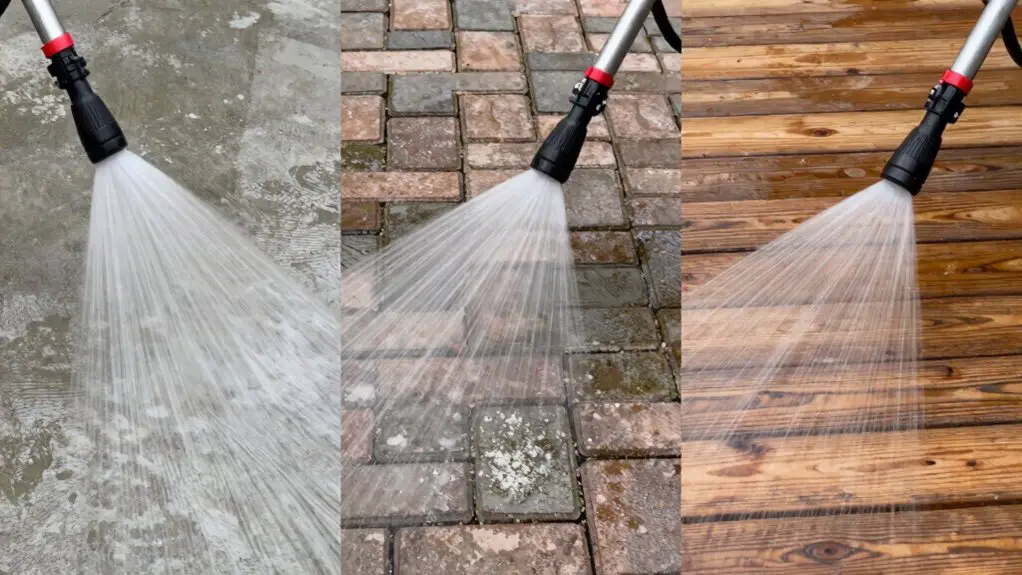
Once you’ve selected the right machine and nozzle, the next step is dialing in the correct PSI for your specific patio material. Different cleaning demands require different power levels, so make sure you match the right pressure to avoid damaging your surfaces.
- Concrete: Activate 3,000 to 4,000 PSI, which is effective for cleaning tough stains and embedded grime.
- Pavers: Use a moderate 2,000 to 2,500 PSI to protect joint sand while still delivering serious cleaning power.
- Wood: Keep it under 1,500 PSI to prevent gouging and splintering of wood fibers.
- All surfaces: Always start at the lowest setting first, then increase gradually to gauge resilience.
Pair your PSI with the correct nozzle—green tip for concrete and pavers, white tip for wood.
Prep Your Patio Before You Power Wash
Before you fire up the pressure washer, you’ll want to prepare your patio so the cleaning process goes smoothly and doesn’t cause collateral damage. Start by clearing all furniture, planters, and decorations to protect items from potential damage and give yourself an unobstructed workspace.
Next, sweep or hose off loose debris so it doesn’t get driven deeper into the surface. Inspect the surface for cracks or loose pavers and fix them before you begin. When you prep your patio properly, you maximize cleaning power and prevent unnecessary repairs.
Cover surrounding plants and landscaping with tarps or plastic sheeting to shield them from chemical overspray. Finally, seal doors and windows to keep water from forcing its way inside. These steps guarantee you’re ready to clean with full force.

Decide Whether You Need Soap or Just Water
Although a pressure washer delivers impressive force on its own, you’ll need to assess your patio’s condition to determine whether water alone will get the job done. Before you decide, consider these key factors:
- Light dust and minor dirt typically surrender to water-only pressure washing without any cleaning solution.
- Stubborn stains and heavy grime demand soap to maximize your cleaning process.
- Sensitive materials like certain pavers or wood can sustain damage from soap, so stick with water for those surfaces.
- Always verify that your chosen cleaning solution is compatible with both your machine and patio material.
For routine maintenance, water alone often delivers commanding results. Reserve soap for those tough battles where pure pressure isn’t enough to dominate the grime.
How to Power Wash Your Patio Step by Step
Now that you’ve settled on whether soap or water suits your patio’s needs, it’s time to put your power washer to work. Don your protective gear, clear all furniture and debris, then sweep the surface clean. Inspect for cracks or loose pavers—address these before you make things worse with high-pressure water.
Set your washer to low PSI and maintain about one foot of distance. Use long, even strokes to dominate stubborn dirt and stains. A rotary cleaning head attachment delivers superior surface cleaning solutions by capturing displaced sand. These pressure washing tips prevent joint material loss during cleaning.
Once finished, let it dry completely before applying new joint sand or sealant. If the job feels overwhelming, consider hiring a professional for ideal results.
Dry, Resand, and Seal Your Patio After Power Washing
Let your patio dry completely for at least 24 to 48 hours after power washing, as moisture trapped beneath sealant or sand will compromise adhesion and durability. Once cleaning solutions have handled stubborn spots and loose dirt is gone, you’re ready to resand and seal with authority.
Patience pays off — let your patio dry fully before sealing to ensure lasting, rock-solid results.
- Remove any displaced joint sand before applying new polymeric sand, which resists weeds and erosion far better than traditional options.
- Fill all paver joints evenly to stabilize the surface and prevent shifting under foot traffic.
- Lightly mist the surface with water to activate polymeric sand, locking it firmly into each joint.
- Apply a high-quality sealer after the sand has settled, delivering superior stain protection and a commanding, uniform finish that keeps your patio looking dominant for years.
Power Washing Mistakes That Ruin Patios
Several common power washing mistakes can permanently damage your patio if you’re not careful with technique and equipment. Using too much PSI—anything over 1500—can gouge or splinter wood and cause damage to the pavers beneath your feet. Choosing the wrong nozzle, like a red (0°) or turbo tip, concentrates high pressure into a destructive beam that shreds delicate surfaces.
Holding the wand closer than 12 inches leaves your surface marred by uneven blast patterns. With pavers, getting too close disturbs joint sand, compromising structural stability. Pressure washers demand respect and precision.
Another costly power washing mistake is skipping the rinse after soaping. Leftover residue attracts dirt and dulls your patio’s finish. Follow proper technique to avoid risking damage and protect your investment.