
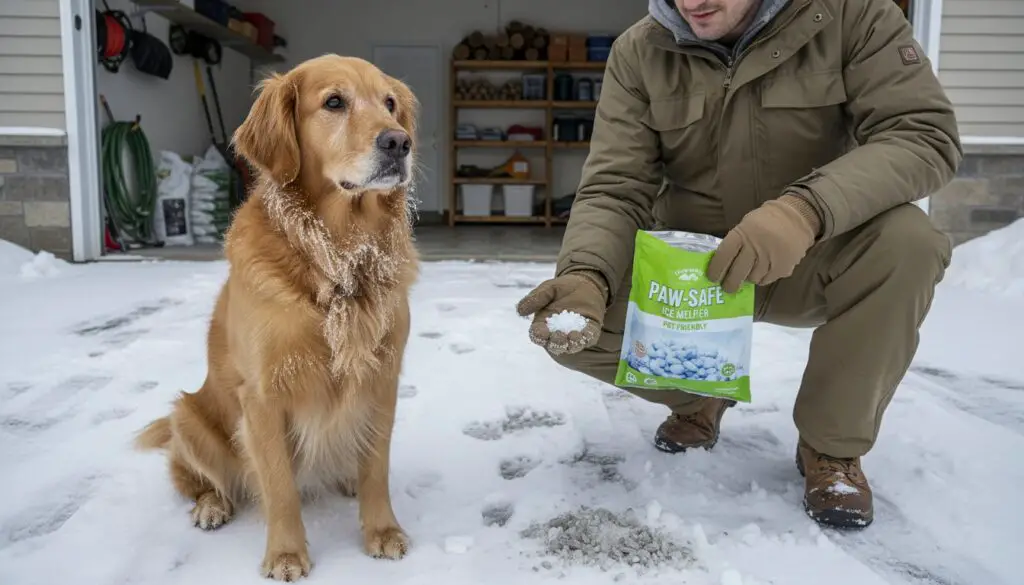
You’ve probably seen those white or blue crystals scattered across sidewalks and driveways all winter long, but what’s safe for melting ice isn’t always safe for your pet’s paws. Traditional ice melts contain chemicals that can burn tender paw pads, cause stomach upset if licked off, and even lead to more serious health issues. Before you grab the nearest bag from the store shelf, there are critical differences between products that could mean the difference between a comfortable winter walk and a vet visit.
Understanding Why Ice Melts Pose Risks to Pets
While ice melts effectively clear winter walkways, they contain chloride-based compounds that threaten your pet’s health in multiple ways. When your dog or cat walks on treated surfaces, these chemicals stick to their paw pads, causing skin irritation and potential chemical burns with prolonged exposure.
Harris Kind Melt Pet Friendly Ice and Snow Melter, Fast Acting 100% Pure Magnesium Chloride
The real danger occurs when pets lick their paws clean—ingesting chloride triggers drooling, vomiting, and diarrhea. Large amounts can cause severe dehydration and stomach ulcerations, potentially proving fatal.
When pets clean their paws, ingested chloride causes vomiting, diarrhea, and dehydration—large amounts can be deadly.
Even products labeled as pet-friendly ice melt aren’t completely pet safe. Your pet can still consume harmful quantities by licking contaminated paws or surfaces.
Understanding these ice melting product risks helps you protect your furry companions during winter months.
Recognizing Symptoms of Ice Melt Exposure in Your Pet
Recognizing ice melt poisoning early can save your pet’s life. Watch for symptoms of gastrointestinal upset like drooling, vomiting, and diarrhea after exposure to ice melts. These signs indicate your pet has ingested the product. Severe cases may cause increased heart rate, muscle weakness, and confusion.
Direct contact creates physical irritation too. Check your pet’s paws for redness or burns after walking on treated surfaces. If ice melt enters their eyes, you’ll notice discomfort and potential damage without quick treatment.
To keep pets safe, monitor them closely after any exposure to ice melts. Don’t wait if concerning symptoms appear—contact your veterinarian immediately.
Early intervention prevents minor exposure from becoming a serious health crisis for your furry companion.
Evaluating Different Types of Ice Melting Products
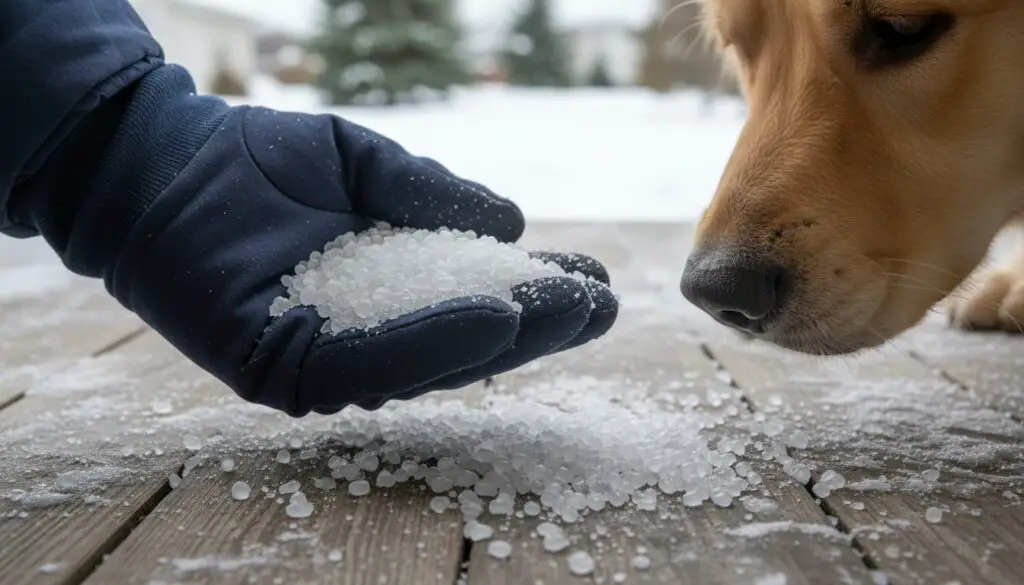
Not all ice melters pose the same risks to your pets. Chloride-based products like sodium chloride and magnesium chloride can cause gastrointestinal upset and paw irritation, making them poor choices for pet-friendly households.
Urea-based ice melts offer safer alternatives that won’t corrode concrete, though they’re ineffective below 21 degrees Fahrenheit.
Consider specialized products like Safe Paw and Morton Safe-T-Pet, designed specifically to protect animals while melting ice effectively.
For traction without melting, you can use sand, gravel, kitty litter, or wood ash—none harm your pets.
Always read product labels carefully, checking for pet-safe certifications before purchasing. Following manufacturer guidelines guarantees you’re minimizing potential hazards while keeping walkways safe during winter months.
Recommended Pet-Safe Ice Melt Brands and Formulations
Understanding the basic categories of ice melters helps you narrow your search, but specific products have earned reputations for protecting pets effectively.
Safe Paw stands out among pet safe ice melts with its non-corrosive formula that’s effective at melting ice in freezing conditions.
Safe Paw’s non-corrosive formula effectively melts ice in freezing temperatures while keeping your pet’s paws protected from harmful chemicals.
Morton Safe-T-Pet uses a urea-based composition, eliminating harmful salts that cause irritation for dogs.
All About Pets Snow & Ice Melt features soft pellets designed to protect sensitive paws while maintaining melting power.
Green Gobbler offers biodegradable properties that safeguard both dogs and cats alongside wildlife.
Before purchasing any product, always check the ingredient list to confirm it’s free from dangerous chlorides.
Following manufacturer guidelines guarantees you’re protecting your pets while maintaining safe walkways throughout winter.
Protective Measures to Shield Your Pet’s Paws
Even when you select the safest ice melt products, adding extra layers of paw protection guarantees your pet stays comfortable during winter walks.
Apply a quality balm like Musher’s Secret before heading outdoors—it creates a protective barrier against de-icing chemicals and extreme temperatures. Consider using dog boots for extra paw defense, though you’ll need to introduce them gradually for your pet’s comfort.
After each walk, wipe their paws with a damp cloth to remove residual ice melt and prevent irritation or accidental ingestion.
Steer clear of heavily treated areas where traditional, non-pet-friendly products might be used. Monitor your dog’s paws regularly throughout winter for any signs of damage, ensuring you can address issues promptly and maintain their comfort on snow and ice.
Immediate Actions to Take After Suspected Exposure
When your pet comes into contact with ice melt, quick action protects their health and prevents complications.
Immediately wipe your pet’s paws after walks to remove residual chemicals and prevent ingestion through licking.
Don’t induce vomiting if you suspect exposure. Instead, consult your veterinarian for guidance on appropriate next steps.
Monitor your pet closely for symptoms indicating ice melts can cause harm, including drooling, vomiting and/or diarrhea, or neurological distress.
Bring the product’s ingredient list or a photo to your veterinary visit, enabling proper treatment decisions.
If severe symptoms develop—such as increased heart rate, muscle weakness, or gastrointestinal distress—seek immediate veterinary care.
Acting swiftly when pet paws encounter harmful ice melt makes the difference between minor irritation and serious health complications.
Non-Chemical Alternatives for Winter Traction and Safety
Natural traction materials offer pet owners a safer path through winter ice without the chemical hazards of traditional melters.
Natural traction materials protect pets from toxic chemicals while delivering reliable grip on winter ice and snow.
Non-chemical alternatives like sand, gravel, kitty litter, and wood ash provide effective traction while keeping your pets safe from harmful substances. These options prevent slips and falls without risking gastrointestinal issues or skin irritation that chemical deicers can cause.
Sand and gravel excel at creating grip on ice while simplifying environmental cleanup.
Kitty litter absorbs moisture and enhances stability on icy walkways.
Wood ash offers similar benefits, though you’ll need to verify it’s chemical-free—avoid ash from treated wood or fertilizer-contaminated sources.
These eco-friendly solutions protect both your pets and the environment, making winter navigation safer for everyone without compromising effectiveness.
Frequently Asked Questions
What Is the Safest Ice Melter for Pets?
Like a gentle blanket on winter sidewalks, you’ll find magnesium chloride-based melters such as Kind Melt safest for pets. Urea-based options like Safe Paw also work well, though they’re less effective in extreme cold.
What’s the Difference Between Pet-Safe Ice Melt and Regular Ice Melt?
Pet-safe ice melt uses urea or glycols instead of harsh chlorides, reducing toxicity risks if your pet ingests it or walks on it. Regular ice melts contain sodium chloride that causes paw irritation and gastrointestinal problems.
How Do I Keep My Pet-Safe From Calcium Chloride?
Worried about calcium chloride harming your furry friend? Use paw booties or protective balms before walks, wipe their paws afterward with a damp cloth, and store products securely out of reach to prevent accidental exposure.
Does Home Depot Have Pet-Safe Ice Melt?
Yes, Home Depot carries pet-safe ice melt options like Safe Paw and Morton Safe-T-Pet. You’ll find products using safer ingredients such as urea or magnesium chloride. Always check labels to confirm they’re certified non-toxic for pets.