

You’ve probably grabbed whatever ice melt was on sale at the hardware store, only to find your driveway damaged or your grass dead come spring. The truth is, not all ice melters are created equal, and choosing the wrong one can cost you hundreds in repairs. Your driveway’s age, your local winter temperatures, and even your landscaping all determine which product will actually protect your property instead of destroying it.
Understanding How Ice Melt Products Work
When winter arrives and ice forms on your driveway, ice melt products become essential tools for maintaining safety and accessibility.
Snow Joe Premium Enviro Blend Ice Melt, Green-Coated Deicer Crystals, 50 lb - Safer MelterThese products work by lowering water’s freezing point, creating a brine that breaks the bond between ice and pavement. Traditional ice melt products like rock salt perform well above 15°F but can damage concrete and harm plants.
Ice melt products lower water’s freezing point to create a brine solution that breaks the bond between ice and pavement surfaces.
Calcium chloride offers superior performance in extreme cold, remaining effective down to -25°F. For environmentally friendly options, calcium magnesium acetate prevents ice bonding without harming surfaces.
You’ll find that melting efficacy depends on temperature, moisture, and wind conditions. Some products can be applied before storms to prevent ice formation, while others work best after accumulation occurs.
Types of Ice Melt Products and Their Effectiveness
While selecting the right ice melt product for your driveway requires understanding your specific needs, the market offers several distinct options with varying performance characteristics.
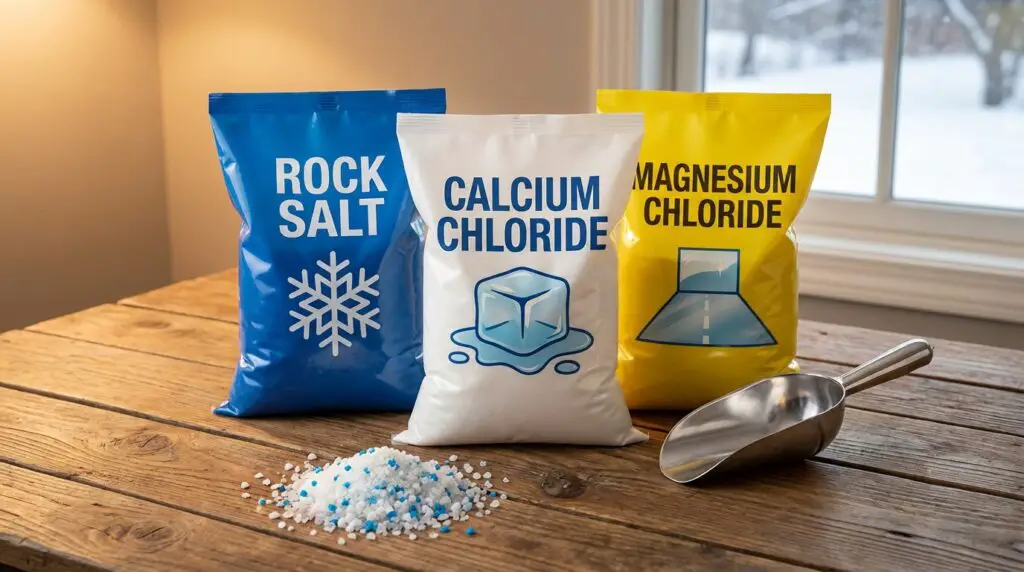
Sodium chloride (rock salt) works effectively above 15°F but can damage concrete surfaces and vegetation.
Calcium chloride performs in temperatures as low as -25°F, delivering fast-acting results during severe conditions, though it may cause concrete spalling.
Magnesium chloride is less corrosive than alternatives and functions down to -13°F, making it gentler on concrete and landscaping.
Calcium magnesium acetate (CMA) provides an environmentally friendly, biodegradable solution effective to 5°F, though at higher costs.
Blended products combine various salts to optimize melting points and effectiveness, allowing you to match specific winter conditions in your region.
Matching Ice Melt to Your Driveway’s Age and Condition
Understanding which ice melt products work best matters little if you don’t consider your driveway’s age and current condition before application.
New concrete driveways require special protection from freeze-thaw cycles, so you’ll want non-chemical options like sand or calcium magnesium acetate instead of traditional rock salt. Avoid damaging your concrete by never using harsh deicers on surfaces less than a year old.
For older concrete surfaces, mild ice melters such as magnesium chloride or pet-safe ice melt alternatives work effectively without causing significant deterioration.
If you have asphalt, magnesium chloride performs well down to -13°F while remaining less corrosive.
Assess your driveway’s age and condition thoroughly before selecting products—this evaluation guarantees winter safety while preventing costly long-term damage.
Temperature Requirements and Climate Considerations
Your climate’s temperature range directly determines which ice melt product will actually work when you need it most. Rock salt handles moderate winter weather above 15°F, but fails in extreme cold.
Rock salt stops working below 15°F, making it useless during extreme cold snaps when you need ice melt protection most.
For harsher climates, calcium chloride works down to -25°F, while magnesium chloride performs until -13°F and remains safe for concrete surfaces. Calcium magnesium acetate offers biodegradable melting to 5°F.
Consider environmental factors beyond basic temperature requirements—wind, ground temperature, and snow accumulation all affect performance.
If you face frequent severe winter weather with fluctuating temperatures, mixing different ice melters addresses varying conditions effectively.
Match your product’s operating range to your area’s coldest temperatures, ensuring reliable performance when climate considerations matter most for safely clearing your driveway.
Protecting Pets and Plants While Using Ice Melt
Even products labeled “pet-safe” or “pet-friendly” can irritate your dog’s or cat’s paws, causing burns, cracking, and discomfort that leads to excessive licking.
Consider calcium magnesium acetate (CMA), a less corrosive alternative that’s gentler on driveways and walkways while protecting plants.
After treating surfaces, rinse your pet’s paws to prevent skin irritation.
Establish a clean-up station at entryways with water and towels to remove salt residues before they’re tracked inside.
Post-application cleanup is critical for concrete maintenance and reducing risk to lawns and gardens.
Remove excess product after ice melts to minimize long-term damage to surfaces and vegetation.
These preventive measures protect both your pets and landscaping throughout winter.
Proper Application Techniques and Timing
When ice melt isn’t applied correctly, you’ll waste product, damage your driveway, and still face slippery conditions.
Proper application techniques start with timing—apply before snow first falls to prevent ice bonding. You’ll need only a thin layer; a 12-ounce cup treats a 20-foot driveway effectively while helping minimize environmental impacts. Mix your ice melt with sand for added traction and reduced surface exposure.
Apply ice melt before snowfall using only a thin layer—one cup covers 20 feet of driveway while protecting the environment.
Temperature dictates product selection. Use rock salt above 15°F, but switch to calcium chloride blends when temperatures drop to -25°F.
Always assess local weather conditions, including ground temperature and wind, before applying. These factors determine when and what type of ice melt you’ll need for maximum effectiveness on your driveway.
Minimizing Environmental Impact and Surface Damage
While traditional rock salt effectively melts ice, it extracts a heavy toll on your property and the surrounding environment.
You’ll minimize environmental harm by choosing calcium magnesium acetate, which proves less corrosive and gentler on vegetation than conventional ice melt products.
Apply sparingly—one coffee mug covers a 20-foot concrete driveway effectively, preventing over-salting that damages landscapes and contaminates waterways.
Remember, one teaspoon pollutes five gallons of water.
Supplement chemical snow melt with abrasive alternatives like sand or kitty litter for added traction without environmental consequences.
After application, sweep away residual slush to protect lawns and gardens.
Invest in sealing concrete surfaces annually to enhance resilience against winter elements, reducing future deicer dependency while extending pavement longevity.
Frequently Asked Questions
How to Choose an Ice Melt?
Don’t let winter catch you off guard—choose ice melt by checking its temperature effectiveness, surface compatibility, and pet safety. Read labels carefully, verify ingredients, and apply preemptively before storms for best results.
What Is the Best Way to Melt Ice on a Driveway?
You’ll get the best results by applying ice melt before snow falls to prevent bonding. Use calcium chloride for extreme cold or magnesium chloride for a gentler option that’s safer for pets and landscaping.
What Is the Least Damaging Ice Melt?
You’ll want Calcium Magnesium Acetate—it’s the champion of ice melts. Unlike harsh alternatives that destroy concrete and vegetation, CMA breaks down naturally, won’t corrode surfaces, and keeps your driveway and plants thriving through winter.
How Much Ice Melt for a Driveway?
You’ll need about 12 ounces of ice melt for a typical 20-foot driveway—roughly one coffee mug full. Don’t over-apply; excess product damages surfaces and harms the environment without improving melting effectiveness.