Picture a crackling fire under a starlit sky, right in your own backyard. Building a DIY fire pit isn’t as complicated as you’d think, but choosing the wrong materials or skipping local codes can turn your project into a costly mistake—or a safety hazard. From fire-rated bricks to proper placement, every decision matters. What follows covers the materials, design options, and safety rules you’ll need to get this right the first time.
Check Local Fire Pit Codes Before You Start
Before you start digging or stacking stones, check your local fire codes and ordinances. Most local regulations guarantee safety and design compliance by requiring your fire pit must sit at least 10 to 15 feet away from your home, structures, and flammable materials. Some municipalities enforce stricter rules governing allowable height, materials, and fuel types for fire pit construction.
If you’re building a DIY fire pit near a property line, you may need additional permissions or neighbor agreements. Ignoring building codes can result in fines and serious safety hazards. Stay current with zoning laws, as they change over time. Taking control of these details upfront puts you in charge of a DIY fire pit project that’s both legal and safe.
Choose an In-Ground or Above-Ground Fire Pit
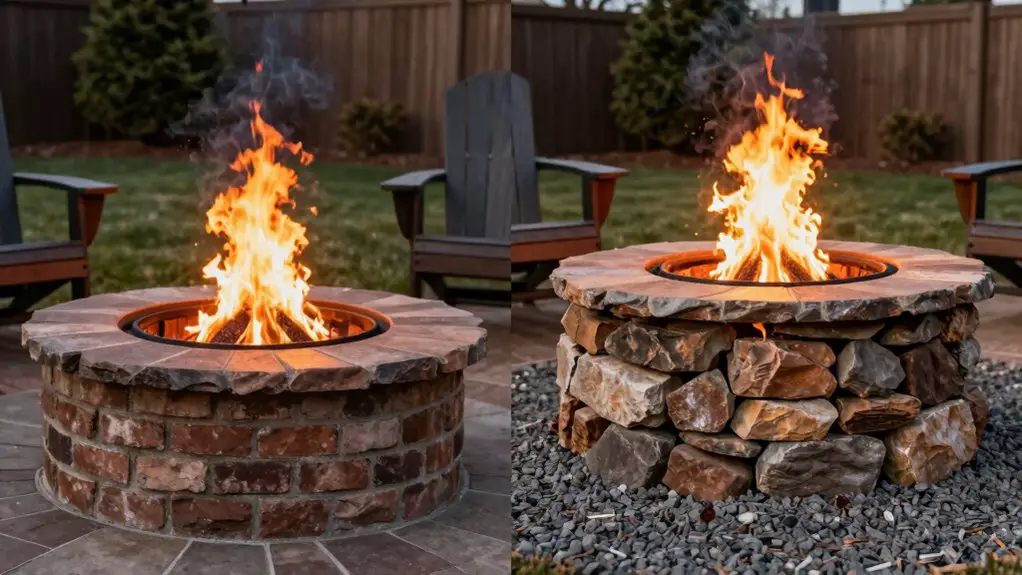
In-ground options deliver a sleek, low-profile aesthetic that integrates naturally into your landscape design. They’re safer, reducing accidental contact with flames, and create a permanent feature you’ll command for years.
Above-ground pits give you flexibility and control. They’re easier to build your fire pit from scratch as a DIY project, require no digging, and you can relocate them as needed—perfect for renters or seasonal setups.
Before committing, review safety regulations in your area. In-ground designs often face stricter local compliance requirements, while above-ground builds typically involve simpler permitting.
Pick the Best Spot for Your Fire Pit
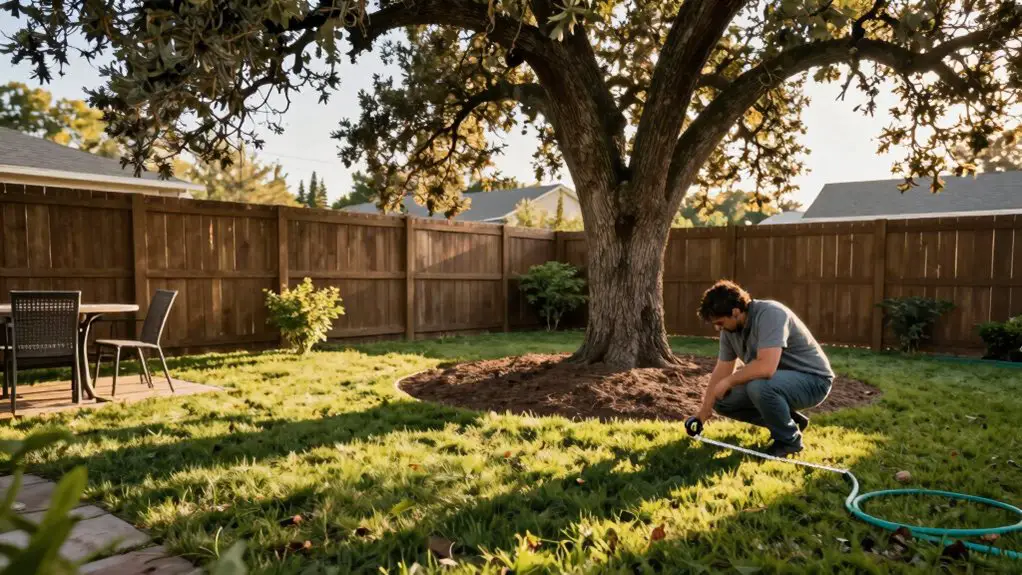
Where you place your fire pit matters as much as how you build it. When building a fire pit, you’ll want to command your outdoor space with smart positioning that keeps everyone safe and comfortable.
Smart fire pit placement is the foundation of a safe, comfortable outdoor space—get it right before you build.
Follow these safety tips to dominate your setup:
- Position your fire pit at least 10 feet from structures, trees, and flammable materials to meet local building codes.
- Account for prevailing wind patterns so smoke blows away from your seating area.
- Maintain a clear buffer zone of at least four feet around the pit for comfortable seating and heat dispersion.
- Never place your fire pit under low-hanging branches, canopies, or covered structures to guarantee proper ventilation.
Check your local regulations before breaking ground to avoid costly setbacks.
Fire-Rated Materials for Your Fire Pit Build
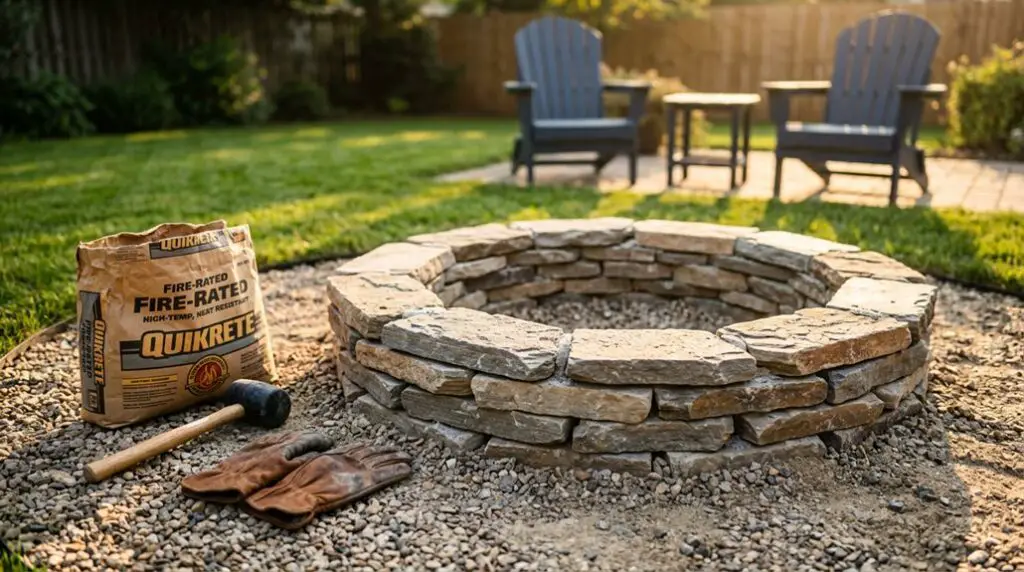
The right materials can make or break your fire pit’s durability and safety. Use fire clay bricks and fire-rated mortar engineered to withstand high temperatures without cracking. Fire brick is your strongest ally against intense heat. Adding a stainless steel interior liner protects surrounding materials from overheating and remarkably extends your pit’s lifespan.
Every stone or boulder in your build must be tested and confirmed heat-resistant. Untested materials can crack or explode under extreme heat, creating dangerous projectiles. Always construct your pit on non-combustible surfaces like gravel or concrete pavers to prevent fire spread.
Among the most important safety tips: regularly inspect all fire-rated materials for wear and damage. Compromised materials lose their protective ability, putting you and your space at risk.


Build Your DIY Fire Pit Step by Step
Five straightforward steps will take you from bare ground to a fully functional fire pit. When you build a fire pit, you command your outdoor space with purpose and precision. Start by selecting level ground at least 10 feet from structures, then mark your fire pit area.
Build your fire pit with confidence — five steps transform bare ground into a backyard centerpiece.
- Excavate 6 inches deep within your marked circle and fill with gravel for drainage.
- Lay your first course of natural stone or heat-rated bricks, checking for level.
- Stack materials to a height between 6 and 12 inches, staggering joints for stability.
- Line the interior with fire brick or a metal insert for protection.
Follow local building codes and apply these safety tips for building and maintaining a fire responsibly. Create a four-foot buffer zone around the pit for comfortable, controlled enjoyment.
Get Your Fire Pit Height and Shape Right
Height matters more than most people realize when building a fire pit. Aim for an outer edge between 6 to 12 inches—this range gives you control over safety while keeping marshmallow roasting effortless. Too high creates hazards for children; too low kills heat dispersal. The right height also prevents logs and embers from escaping.
Your fire pit’s shape defines both function and aesthetic. A circular design is easier to build with uniform stones and naturally draws people together. A square fire pit delivers a modern edge that complements geometric backyard layouts. Choose the shape that commands your outdoor area and matches your overall design vision. Consider available space carefully—your decision should enhance how the entire zone functions, not just how it looks.
Add Fire Pit Seating, Lighting, and Finishing Touches
Seating transforms a fire pit from a backyard feature into a genuine gathering space. Arrange benches, Adirondack chairs, or built-in stone seating in a circular pattern to command the social dynamic around your outdoor fireplace.
The right seating arrangement turns your fire pit into the heart of every outdoor gathering.
To create a safe and enjoyable environment, focus on these essentials:
- Lighting — Install string lights, lanterns, or pathway lights for warm ambiance and nighttime visibility.
- Wind protection — Add a low wall or shrubbery as a windbreak to control smoke direction.
- Comfort accessories — Layer decorative cushions, throws, and outdoor rugs across your seating areas.
- Functional extras — Position a firewood holder, side tables, or a portable cooler nearby for effortless entertaining.
These finishing touches give you total control over your backyard fire pit experience.
Follow These Essential Fire Pit Safety Rules
Before you light your first fire, understanding essential safety rules will protect your family, your property, and your neighbors. Position your fire pit at least 10 feet away from structures, trees, and anything flammable. Always build on a non-flammable surface like gravel or concrete to prevent accidental spread.
You must supervise the fire at all times—never walk away, especially with children or pets around. Burn only clean dry firewood, and avoid accelerants or treated lumber that release toxic fumes. Building your own fire demands responsibility, so keep safety equipment within arm’s reach. A fire extinguisher, bucket of water, or sand gives you immediate control if flames escape containment. These precautions guarantee you command your fire pit confidently and safely every time you use it.
Maintain Your Fire Pit Season After Season
Once you’ve built your fire pit, regular maintenance keeps it safe, efficient, and looking great for years to come. Start with routine cleaning—remove cooled ashes and debris after each use to maintain efficiency and safety. Inspect the fire pit periodically for cracks, rust, or shifting materials so you can address problems before they escalate.
Take command of your fire pit’s longevity with these steps:
- Scrub stone surfaces with a stiff-bristled brush and warm soapy water, and apply rust-preventative coatings on metal components.
- Cover the fire pit with a fitted cover when not in use to shield it from weather.
- Check local regulations annually to verify compliance and safety standards.
- Address damage immediately, maintaining the fire pit’s structural integrity season after season.