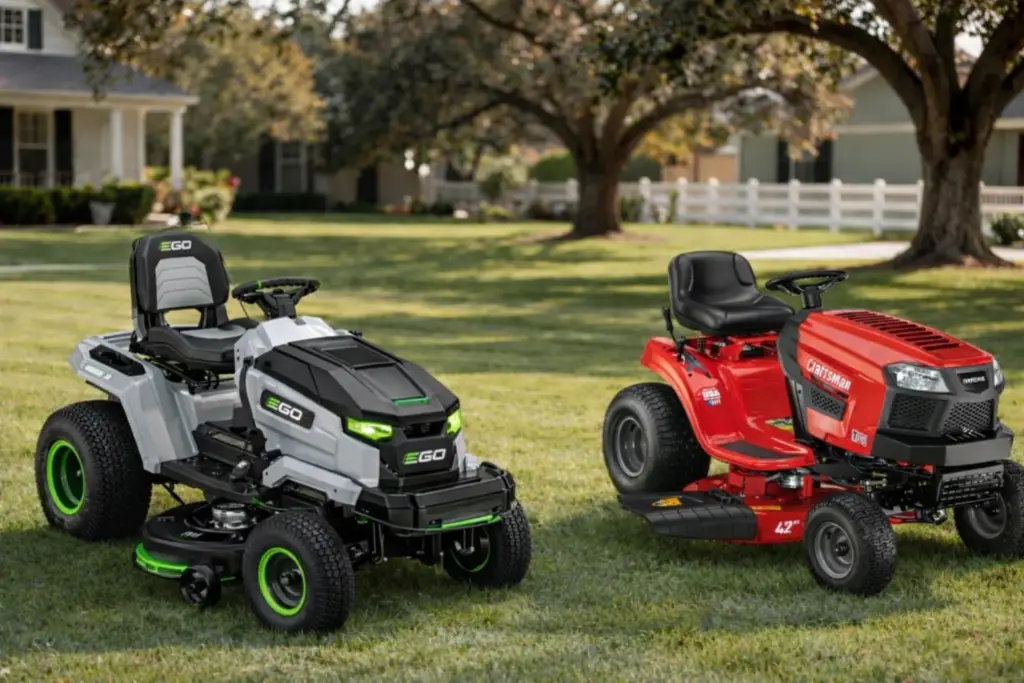
The average American spends about 70 hours per year mowing their lawn—that’s nearly three full days behind the wheel of a riding mower. You’ll want that time to be as efficient and comfortable as possible. Choosing the right machine can make a real difference in both your results and your sanity. We’ve narrowed down the three best riding lawn mowers for 2026, each built to handle a different set of needs.
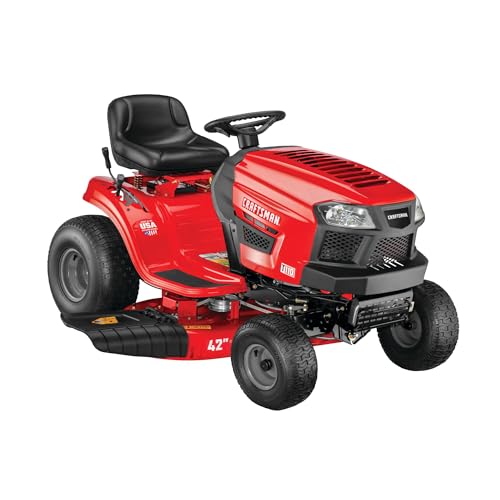
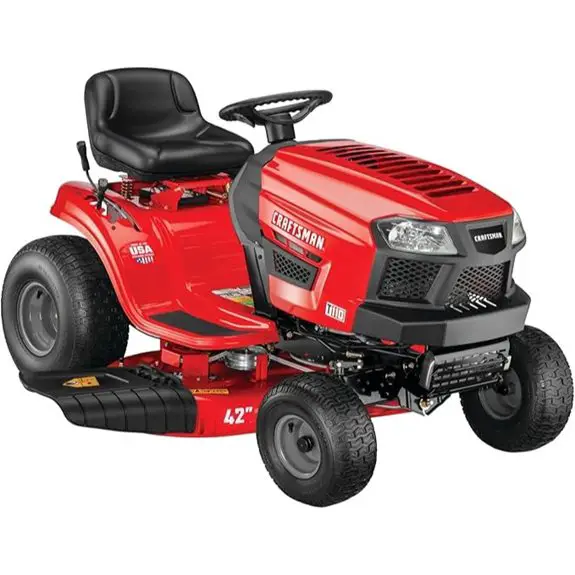
CRAFTSMAN 42" Gas Riding Lawn Mower with 17.5 HP* Briggs and Stratton Single-Cylinder Engine, Gas Lawn Tractor with 7-Speed Transmission, Red/Black...

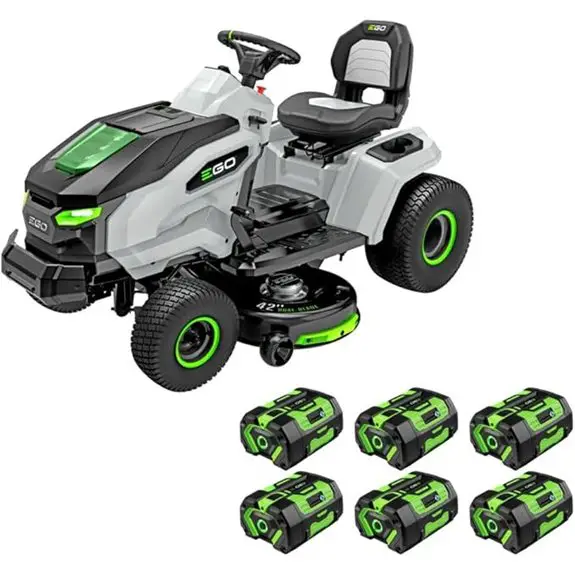
EGO Power+ Electric Riding Lawn Mower, 42" Deck Cordless Tractor, Includes (6) 56V 6.0Ah Batteries and Charger - TR4204

More Details on Our Top Picks
CRAFTSMAN 42″ Gas Riding Lawn Mower (13AN77XSA93)
With its 18-inch turning radius, the CRAFTSMAN 42″ Gas Riding Lawn Mower (13AN77XSA93) is the best pick for homeowners who need to navigate tight spaces around trees, flower beds, and garden borders. Its 17.5 HP Briggs and Stratton engine delivers reliable starting and consistent cutting across up to 2 acres.
The rugged 42-inch stamped steel deck pairs with a 7-speed manual transmission, giving you full control over cutting pace. Heavy-duty 15×6 front and 20×8 rear wheels enhance stability on uneven terrain. You’ll stay comfortable on the contoured low-back seat, and an optional mulching kit adds professional-grade finishing.
- Power Source:17.5 HP Briggs & Stratton gas engine
- Deck Size:42 inches
- Cutting Capacity:Up to 2 acres
- Cutting Height Range:Up to 3.13 inches max
- Deck Material:Stamped steel
- Speed Control:7-speed manual transmission
- Additional Feature:18-inch turning radius
- Additional Feature:Optional mulching kit
- Additional Feature:7-speed manual transmission
EGO Power+ 42″ Cordless Electric Riding Lawn Mower
The EGO Power+ 42″ Cordless Electric Riding Lawn Mower stands out as the best option for homeowners who want gas-equivalent power without the hassle of engine maintenance. It delivers the equivalent of 21 horsepower, mows at speeds up to 6 MPH, and cuts up to 1.5 acres on a single charge using six 56V 6.0Ah batteries.
Its 42-inch stamped steel deck offers 12 height adjustments from 1.5 to 4.5 inches, while two anti-scalp wheels protect your lawn. You’ll also get cruise control, three blade settings, and three drive speeds. Dual belt-free brushless motors enhance durability and minimize maintenance.
- Power Source:Six 56V 6.0Ah batteries (electric)
- Deck Size:42 inches
- Cutting Capacity:Up to 1.5 acres per charge
- Cutting Height Range:1.5 to 4.5 inches (12 positions)
- Deck Material:Stamped steel
- Speed Control:Three drive speeds with cruise control
- Additional Feature:Six 56V 6.0Ah batteries
- Additional Feature:Dual belt-free brushless motors
- Additional Feature:Cruise control equipped
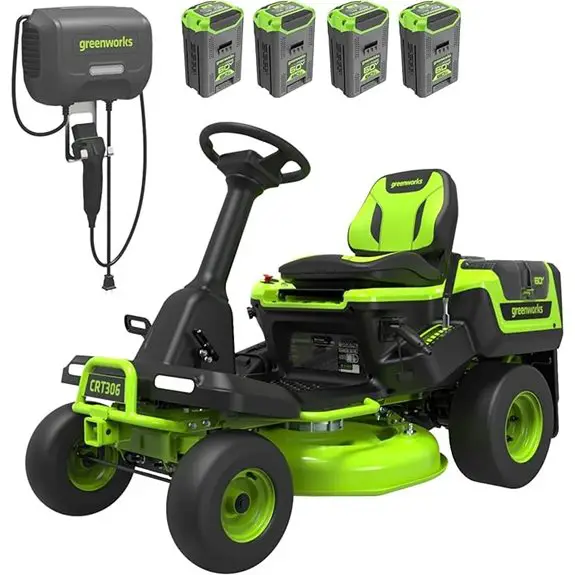
Greenworks 60V 30″ Tractor (4) 8.0Ah + Wall Charger
Homeowners managing up to 1.25 acres of lawn will find the Greenworks 60V 30″ Tractor a compelling electric alternative to traditional gas-powered riding mowers. Its brushless motor delivers power equivalent to a 16 HP gas engine, with cutting speeds up to 6 MPH and adaptive traction control for slopes up to 15°.
The 30″ stamped steel deck offers seven cutting height positions from 1.5″ to 4.5″, while SmartCut™ Technology adjusts performance based on grass conditions. You’ll appreciate the USB charging ports, cup holders, integrated deck wash port, and 200 lb. towing capacity. Four 8.0Ah batteries and a 4-year warranty complete the package.
- Power Source:Four 60V 8.0Ah batteries (electric)
- Deck Size:30 inches
- Cutting Capacity:Up to 1.25 acres per charge
- Cutting Height Range:1.5 to 4.5 inches (7 positions)
- Deck Material:Stamped steel
- Speed Control:Cutting speeds up to 6 MPH with adaptive traction control
- Additional Feature:On-board USB charging ports
- Additional Feature:200 lb towing capacity
- Additional Feature:SmartCut™ adaptive technology
Factors to Consider When Choosing Riding Lawn Mowers
Choosing the right riding lawn mower means matching the machine to your specific needs, starting with your yard size, terrain, and the engine power required to handle both. You’ll also want to compare cutting deck widths, weigh the trade-offs between battery and gas power, and evaluate comfort and maneuverability features that affect how enjoyable the mowing experience actually is. Getting these factors right guarantees you’re investing in a mower that performs well and lasts for years.
Yard Size and Terrain
Before you invest in a riding lawn mower, it’s essential to match the machine’s capabilities to your yard’s specific size and terrain. For lawns up to 2 acres, a gas-powered riding mower with a 42-inch deck delivers efficient cutting while keeping mowing time short. If your yard is around 1.5 acres, an electric mower can handle the job on a single charge at speeds up to 6 MPH.
Terrain matters just as much as size. For slopes up to 15°, choose a mower with adaptive traction control to maintain stability. Wider decks work best on larger, flat areas, while adjustable cutting heights—ranging from 1.5 to 4.5 inches—give you the flexibility to handle different grass types and varying ground conditions effectively.
Engine Power Options
When you’re comparing riding lawn mowers, engine power directly shapes how well the machine handles your property. Gas-powered models typically run between 17 and 21 horsepower using single-cylinder engines, delivering strong performance for larger yards. Electric models now match that output, with some reaching 21 horsepower through brushless motors that require less maintenance.
Beyond raw horsepower, consider what powers the machine. Gas engines demand regular oil changes, filter replacements, and fuel management. Brushless electric motors eliminate those tasks but rely on battery capacity. Most electric riding mowers cover 1.25 to 1.5 acres per charge, so you’ll need to match battery range to your lot size. Both gas and electric options can reach cutting speeds of 6 mph, keeping mow times comparable across power types.
Cutting Deck Width
Engine power matters, but the width of your cutting deck determines how quickly you actually finish the job. A 30-inch deck gives you tight maneuverability around flower beds, trees, and garden features—perfect for smaller yards. A 42-inch deck covers more ground per pass, cutting your mowing time considerably on medium to large lawns.
Wider decks add weight, so you’ll need a stronger engine to prevent bogging down in thick grass. They also tend to offer more cutting height settings, letting you adjust for different grass types and seasonal growth stages.
Consider your terrain carefully. If you’re traversing slopes or uneven ground, a narrower deck handles better. For flat, open expanses, go wider—you’ll finish faster without sacrificing cut quality.
Battery Versus Gas Power
Although gas-powered riding mowers have long dominated the market with their raw horsepower—some models pushing 17.5 HP or more—battery-electric options have closed the gap considerably. Today’s cordless electric riders deliver up to 21 horsepower while running quieter and producing zero emissions.
However, you’ll want to weigh operational range carefully. Battery mowers typically handle up to 1.5 acres per charge, whereas gas models run continuously as long as you’ve got fuel. If you’re managing a larger property, gas remains the practical choice—or you can extend a battery mower’s range by adding extra batteries.
You’ll also save on maintenance with electric models. Without oil changes, fuel filters, or spark plugs to worry about, you’ll spend less time servicing and more time mowing.
Comfort and Maneuverability Features
Because you’ll likely spend hours on your mower each session, comfort features matter more than most buyers realize. A contoured low-back seat reduces fatigue and keeps you supported throughout prolonged mowing. Adjustable speed settings, like a 7-speed manual transmission, let you match your pace to terrain and grass conditions without overworking the engine or yourself.
Maneuverability directly impacts how efficiently you mow. An 18-inch turning radius helps you navigate tight spaces and obstacles without constant repositioning. Heavy-duty wheels—15×6 inches up front and 20×8 inches in the rear—deliver stability and control on uneven ground. Don’t overlook anti-scalp wheels, either. They prevent the deck from gouging your turf during turns, ensuring a clean, even cut across your entire lawn.
Maintenance and Durability
How much time and money you’ll spend on upkeep depends largely on whether you choose a gas or electric riding mower. Gas models demand regular oil changes and air filter replacements, while electric mowers have fewer moving parts and simpler maintenance routines. Sealed battery systems also eliminate fuel storage and handling hassles.
Look for electric mowers equipped with brushless motors—they’re built for enhanced durability, producing less wear and tear than traditional combustion engines. Dual belt-free cutting systems further reduce maintenance frequency by minimizing components that can break or wear out.
Don’t overlook construction quality. Stamped steel decks and high-capacity batteries directly impact how long your mower lasts and how well it performs season after season. Durable materials mean fewer replacements and better long-term value.