
Welding Safety Checklist Every DIYer Needs

You’re about to fire up that welder for your weekend project, but one overlooked safety step could turn your DIY dream into a dangerous nightmare. Whether you’re tackling your first welding job or you’ve been at it for years, having an all-encompassing safety checklist isn’t just smart—it’s absolutely critical. The difference between a successful project and a trip to the emergency room often comes down to the precautions you take before striking that first arc.
Setting Up Your Workspace for Maximum Safety
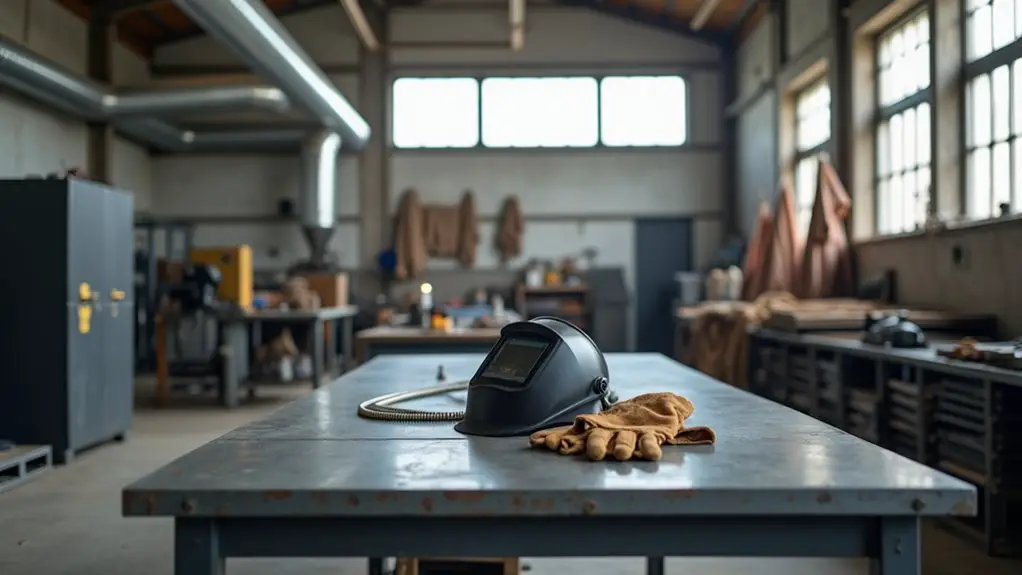
When you’re preparing to weld, creating a safe workspace isn’t just recommended—it’s crucial for protecting yourself and others around you. Start with your flooring—cement or packed dirt works best since these materials won’t conduct electricity or catch fire easily.
Safe welding starts with the right foundation—choose cement or packed dirt flooring to prevent electrical conduction and fire hazards.
Clear all hoses and cables from walkways to prevent trips, and remove flammable materials like paper and cloth rags from your work area.
Position your equipment on flat, stable surfaces away from anything combustible. Install strong task lighting for when you’re wearing your welding mask, plus gentler ambient lighting for setup work. Consider ceiling drops for managing cables to further reduce tripping hazards in your workspace.
Guarantee proper ventilation by opening windows and doors or using fans to remove dangerous fumes. Keep your workspace organized with designated spots for tools and properly secured cables.
Essential Personal Protective Equipment You Cannot Skip
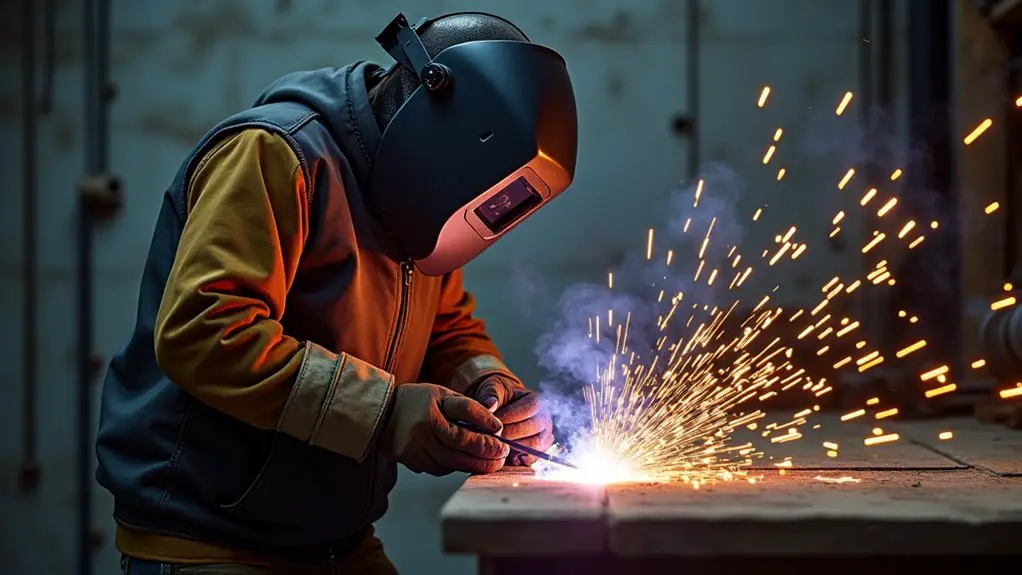
A properly organized workspace means nothing if you’re not wearing the right protective gear.
You’ll need a welding helmet with automatic brightness adjustment and UV protection to shield your face and neck from sparks and radiation.
Don’t skimp on flame-resistant gloves that cover your hands and wrists—leather options offer excellent durability.
Your protective clothing should include flame-resistant aprons, pants, or welding jackets that comply with local safety standards. Choose dark colors to reduce light reflection and improve safety during welding operations.
Respiratory protection isn’t optional when toxic fumes are present, so invest in properly fitting masks or air-purifying respirators.
Complete your safety arsenal with steel-toed boots, safety glasses for grinding, and hearing protection.
Pre-Welding Equipment Inspection and Maintenance

Before you strike your first arc, thorough equipment inspection can mean the difference between a safe welding session and a dangerous accident.
You’re part of a community that prioritizes safety, so let’s walk through the essential checks together.
Start by disconnecting power and inspecting your cables for damage, ensuring connections aren’t overheated.
Power disconnection and cable inspection form the foundation of every safe welding session—damaged connections are accidents waiting to happen.
Check that your gas cylinder’s secured upright with proper regulators, and test connections with soapy water for leaks.
For MIG welding, verify your wire feed system’s functioning smoothly and contact tips aren’t worn.
Don’t skip the basics: confirm emergency stops work, flashback arrestors are installed, and your workspace has adequate ventilation.
Remove any flammable materials from your welding area to prevent fire hazards during your project.
Keep detailed inspection records—they’re your safety net and proof of responsible welding practices.
Fire Prevention and Emergency Response Planning
Your equipment inspection sets the foundation for safe welding, but fire hazards present the most immediate threat to both you and your workspace.
Start by clearing flammable materials within 35 feet of your welding area. You can’t always remove everything, so use fire-resistant barriers to shield what stays put. Keep wooden surfaces wet or protected, and watch for hidden combustibles like sawdust or oily rags.
Install fireproof screens around your work zone and position a proper fire extinguisher within 50 feet. Know your fire extinguisher types – Class A for combustible solids, Class B for flammable liquids, Class C for electrical fires, and Class D for combustible metals.
You’ll need to maintain a fire watch for at least 30 minutes after you finish welding. Don’t skip the post-welding inspection – check for smoldering materials and lingering sparks that could ignite hours later.
Proper Ventilation and Fume Management
Every breath you take while welding can expose you to dangerous fumes and gases that cause serious health problems over time.
You need proper ventilation to protect yourself and create a safer workspace that fellow welders respect.
Start with local exhaust ventilation—it’s your best defense. Position movable hoods close to your work or use downdraft benches that pull contaminants downward.
Position local exhaust hoods close to your welding work—it’s your strongest defense against dangerous fumes and contaminants.
You’ll want at least 100 ft/min air velocity across your welding arc and 1000 CFM airflow for effective extraction.
If you’re working in confined spaces, mechanical ventilation isn’t optional—it’s essential.
Monitor air quality continuously and maintain at least 4 air changes per hour. Train yourself on proper equipment positioning and regularly maintain your ventilation systems.
When ventilation proves inadequate for your workspace conditions, use personal protective equipment like respirators to safeguard your respiratory health.
Your lungs will thank you.
Understanding Electrical Safety and Grounding
While proper ventilation protects you from airborne hazards, electrical dangers pose an equally serious threat that can kill you instantly.
You’re dealing with potentially lethal voltages ranging from 120V to 575V, so understanding electrical safety isn’t optional—it’s survival.
Ground your workpiece to earth ground following ANSI Z49.1 standards, and connect your work clamp as close to the welding point as possible.
Never touch an energized electrode while contacting the work circuit. Wear insulated rubber boots and stand on rubber mats, especially in wet conditions.
Inspect your welding leads regularly for damage or improper splicing. Be especially cautious when changing electrodes since welding machines maintain a no-load voltage output even when not actively welding.
Don’t work alone in electrically hazardous situations, and never simultaneously touch electrode holders connected to two machines—the double voltage can shock you.
Safe Welding Techniques for Beginners
Even with proper electrical safety measures in place, poor welding technique can quickly turn a routine job into a dangerous situation. You’ll want to master these fundamentals that every successful welder swears by.
Start with clean metal surfaces—contamination causes weak welds that’ll fail when you need them most. Maintain steady, consistent speed during your passes to avoid defects like undercut or porosity. Keep your electrode at the recommended 15-degree trailing angle for professional results.
Control your arc length carefully; too short causes sticking, while too long creates spatter and weak joints. Position yourself for stability and avoid overreaching, which leads to fatigue and poor control. When MIG welding, maintain your contact tip distance at approximately half an inch from the workpiece for optimal results.
Use clamps to secure your workpiece—your fellow DIYers know this prevents frustration and improves accuracy considerably.
Recognizing and Avoiding Common Welding Hazards
Mastering proper technique sets the foundation, but you’ll also need sharp awareness of the specific hazards that catch welders off guard every day.
Burns from hot metal and welding tools top the injury list, while arc rays and flying particles threaten your vision permanently.
Electrical shock becomes deadly when you’re touching two metal objects with voltage between them. Don’t underestimate toxic fumes—they’re especially dangerous in confined spaces where ventilation can’t help you.
Your environment matters too. Underwater welding amplifies every risk, while construction sites increase fire and explosion dangers.
Always clear flammable materials from your work area and maintain proper ventilation. With 500,000 welding-related injuries happening each year, following safety protocols isn’t optional—it’s essential for protecting yourself from becoming another statistic.
Post-Welding Cleanup and Equipment Storage
Once your final pass cools down, your real safety work begins with thorough cleanup and proper equipment storage.
You’ll need to remove slag, splatter, and burrs using a wire brush or grinder. For multi-pass welds, always clean between layers to maintain quality.
Let your tools cool completely before handling, then wipe them down with a dry cloth before storage.
Store welding machines in dry, ventilated areas and wind cables neatly to prevent damage. Keep gas cylinders upright, capped, and secured in designated zones.
Don’t forget your PPE—inspect gloves, jackets, and helmets for tears or degradation.
Replace worn items immediately and store everything in clean, dry areas.
Finally, sweep metal shavings, dispose of waste properly, and check for lingering hot spots. Clean your TIG rod with acetone to remove any dirt and grease that could contaminate future welds.
Frequently Asked Questions
What Welding Certifications or Licenses Do DIYERS Need Before Starting Projects?
You don’t need specific welding certifications for DIY projects, but you’ll want to follow AWS industry standards and check your local regulations. Consider taking training programs to boost your skills and safety knowledge.
How Much Should Beginners Budget for Quality Welding Safety Equipment?
Over 230,000 welding injuries occur annually, but you can protect yourself affordably. Budget $300-600 for quality safety gear – your fellow DIY welders know investing in proper protection beats costly emergency room visits every time.
Are There Legal Restrictions on Welding in Residential Areas or Backyards?
You’ll face legal restrictions depending on your local zoning laws, noise ordinances, and HOA rules. Check if you need home occupation permits for frequent welding and verify you’re complying with safety standards.
What Insurance Considerations Should DIYERS Know Before Welding at Home?
Better safe than sorry when welding at home! You’ll need to check if your homeowners insurance covers welding activities, guarantee equipment protection, and consider liability coverage for potential accidents or property damage.
How Often Should Welding Equipment Be Professionally Serviced or Calibrated?
You’ll want to calibrate your welding equipment annually for best results. Most manufacturers recommend yearly professional servicing, especially if you’re doing critical projects or using equipment frequently for safety and quality.